
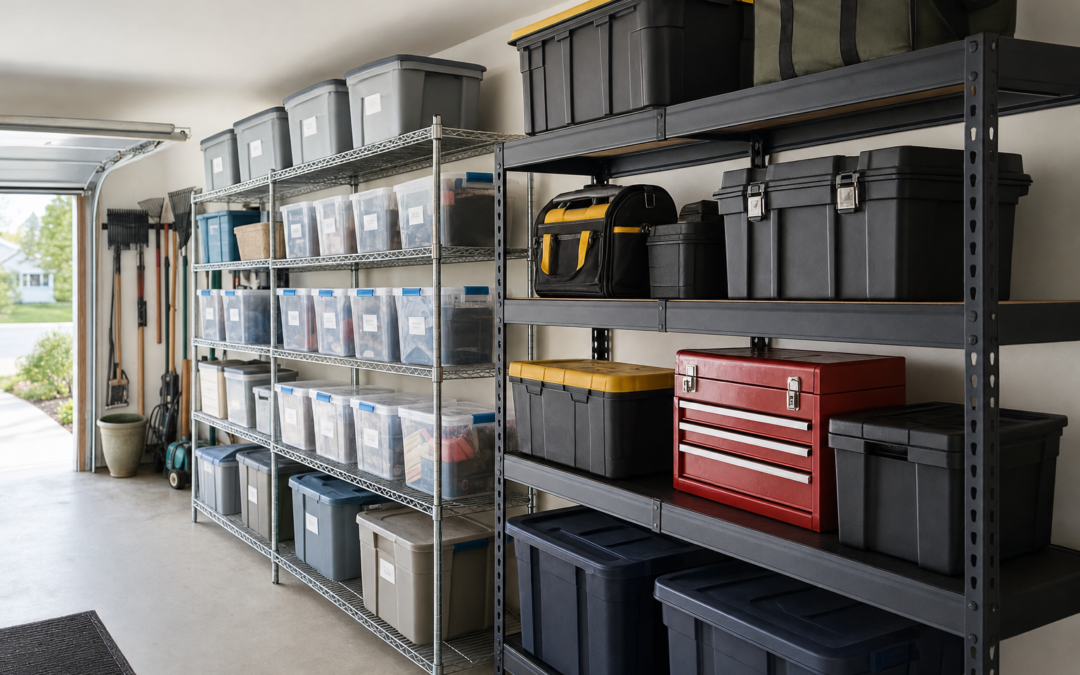
Garage shelving is where most reclaim-the-floor projects actually succeed or stall. Cabinets look finished. Ceiling racks wow guests. But the workhorse that holds weekly bins, bulk paper goods, and “we might need this” overflow is still a well-chosen wire or steel shelving system. This 2026 comparison walks through wire versus heavier steel designs, freestanding versus wall-anchored layouts, weight ratings that matter, and how to pick depth so you do not scrape mirrors every time you park.
For the big-picture map, use our Garage Storage hub and the garage storage ideas pillar. Here we stay on shelves: what to buy first, how to load them, and which reviewed units fit typical suburban garages.
What “Good Garage Shelving” Actually Means
Living-room bookcases fail in garages. Temperature swings, concrete dust, humidity, and dense bins punish particleboard and flimsy brackets. Garage-ready shelving should tolerate uneven slabs, accept adjustable shelf heights, and publish honest per-shelf capacities—not only a flashy total-load number.
- Visibility: wire grids let you read labels without unpacking
- Airflow: open wire sheds dust and moisture better than solid particleboard
- Adjustability: tall coolers and short shoe bins must share one unit
- Footprint: depth must respect the vehicle envelope
- Stability: leveling feet and optional wall anchors for tall units
If a unit cannot be leveled on a sloped slab, it will rock, rack, and eventually get abandoned against the wall with half its bins on the floor again.
Wire Shelving vs Heavy-Duty Steel: The Real Tradeoffs
Wire shelving strengths
Chrome or epoxy-coated wire shelves are the fastest path to a clean side wall. You see tote labels through the grid. Spills do not pool as easily. Assembly is usually straightforward with split sleeves or similar height locks. For household overflow, sports gear in bins, and light-to-moderate shop supplies, wire is hard to beat on speed and clarity.
Wire shelving limits
Very small parts can tip through grids unless you add liners. Extremely dense loads—cases of fluids, stacks of tile, engine parts—may push you toward thicker steel shelves with higher per-shelf ratings. Wire also shows everything, which is a feature for inventory and a downside if you want a showroom look.
Heavy-duty steel strengths
Thicker steel wire or solid steel shelves handle denser garage loads and abuse from totes that get dropped into place. Adjustable heavy-duty racks often publish higher per-shelf capacities and feel more planted when loaded with shop weight. If your garage doubles as a serious DIY zone, steel earns its keep.
Heavy-duty steel limits
Heavier units are harder to move once loaded. Some designs trade a bit of “see-through” clarity for strength. Cost per bay can rise. You still need leveling and smart depth choices—steel does not forgive a rack that invades the car door swing.
Freestanding vs Wall-Mounted vs Closet-Style Systems
Most garage wins come from freestanding wire or steel racks along the long walls. They install without finding every stud, and you can relocate them if you change vehicles. Wall-mounted standards and brackets free the floor entirely but demand solid anchoring and careful planning. Closet-style wire organizers can work on a finished garage wall for lighter household goods, especially when you want hanging space plus shelves in one footprint.
Choose freestanding when you want speed and flexibility. Choose wall-mounted when floor width is extremely tight. Choose closet-wire hybrids when a mudroom-like wall shares coats, baskets, and bulk paper with the garage.
Weight Ratings Without Getting Fooled
Marketing loves total capacity. Garages care about per-shelf reality.
- Read per-shelf capacity first
- Load heaviest bins on the bottom third
- Distribute weight; do not stack all density on one shelf
- Lock casters if the unit is mobile—or better, keep garage racks stationary when fully loaded
- Anchor tall units if the manufacturer recommends it, especially with kids in the house
A 1,000-plus-pound total rating split across four shelves is not permission to put 1,000 lb on the top wire.
Depth, Width, and the Vehicle Envelope
Tape out your car’s parked footprint including door swing. Then choose shelf depth that stays outside that tape. Many garage racks land in the 14–18 inch depth range for side walls. Deeper shelves hold more but punish mirrors and door panels. Two matching units side by side often beat one oversized island that blocks a bay.
Height matters too. Leave room for a step stool in front of the rack. Do not bury the electrical panel, water heater clearances, or a fire extinguisher behind a new shelving run.
Product Callouts: Shelving Systems We Review
Start with these reviewed options when you want clear capacity stories and garage-appropriate builds.

Amazon Basics 4-Shelf Steel Wire Storage Shelves for Garage — A clean starter wire rack for labeled bins and household overflow along a side wall. Ideal when you want visibility, simple assembly, and a footprint that respects parking.

Amazon Basics 4-Shelf Adjustable Heavy Duty Steel Wire Rack Storage — Step up when loads get denser or bin heights vary wildly. Adjustable heavy-duty steel wire helps you tune shelf spacing for mixed totes, fluids, and shop supplies.

ClosetMaid Wire Closet Organizer System — A wire organizer approach that can suit finished garage walls or transitional mudroom-garage zones where baskets, hanging space, and shelves share one system.
How to Build a Shelving Wall That Stays Used
Hardware fails when habits fail. Matching totes beat random cardboard. Labels beat memory. Empty capacity beats a 100% full rack that pushes the next delivery onto the concrete.
- Standardize on one or two tote sizes
- Label contents and season on two sides
- Group by activity: auto, sports, camping, holiday, household
- Keep a donate/trash bin at the end of the run
- Photograph the finished wall so everyone resets to the same layout
Put weekly-access items between knee and shoulder height. Archive and light bulk go high. Dense weight stays low. That single habit prevents most “the rack feels sketchy” moments.
Wire Liners, Shelf Covers, and Small-Parts Strategy
If small boxes tip through wire grids, add plastic liners or use bins as the true shelf surface. Do not store loose screws on open wire. A rolling parts cabinet or drawer unit near the workbench handles fasteners better than a top shelf of unmarked jars.
For paper goods and pantry overflow, sealed bins still win in garages—humidity and dust are constant. Wire shelves shine when the bin is the container and the shelf is only the stage.
Layout Recipes for Common Garages
One-car garage
One tall wire unit on the long wall, a narrow cabinet for chemicals, and hooks for bikes. Avoid deep freestanding racks across the back wall if they eat the only walking lane.
Two-car suburban garage
Two matching wire or steel units along one long wall create a continuous storage run. Keep the opposite wall for a workbench or cabinets. Put seasonal bulk overhead instead of doubling floor racks in both bays.
Workshop-first garage
Heavy-duty steel near the bench for dense supplies; wire farther away for household bins. Do not mix oily shop parts on the same shelves as holiday décor—cross-contamination is real.
Budget Sequencing
Buy one excellent rack and matching bins before you buy three mediocre units. Fill it properly. Then add a second matching bay. Parallel mismatched racks create visual noise and wasted cubic feet. Lighting upgrades often matter more than a third rack—bright LEDs make labels readable and discourage floor piles.
Safety Notes Specific to Shelving
- Anchor tall units when instructed
- Keep walking lanes continuous to man doors
- Never block breaker panels
- Store chemicals in lockable cabinets, not open wire
- Avoid extension cords draped across the aisle in front of racks
Humidity, Dust, and Why Garage Shelves Are Not Closet Shelves
Garages breathe differently than closets. Cars bring in rainwater and snow melt. Concrete slabs off-gas moisture seasonally. Fine dust from drywall projects and lawn equipment settles on every horizontal surface. That environment is why wire grids and sealed bins outperform open cardboard and melamine closet kits that were designed for bedrooms.
If your garage is particularly damp, prioritize epoxy-coated or well-finished metal components and keep paper goods in sealed totes rather than on open shelves in original packaging. Silica packs in long-term archive bins are cheap insurance for photos and fabrics that occasionally overflow from the house.
Dust management is mostly behavioral: leave empty capacity, wipe shelf wires when you reorganize seasonally, and avoid storing soft goods without lids. A leaf blower aimed at shelves is a last resort that redistributes grit onto cars—use a vacuum brush attachment instead.
Assembly Quality Checks Most People Skip
After assembly, do not immediately max-load the unit. Check that posts are plumb, shelves are fully seated on their locks or clips, and leveling feet actually contact the slab. On uneven concrete, a rack that looks fine empty can rock once the top shelves gain weight.
Push test the empty rack gently. If it walks or wobbles, level again and consider wall anchoring. Confirm that shelf height spacing matches your tote plan before you fill everything—adjusting sleeves under load is miserable. Keep the instruction sheet in a labeled pouch on the rack or photograph it into a household maintenance album.
If casters were optional, decide now. For garage perimeter storage, stationary feet usually win. If you truly need mobility for cleaning, choose lockable casters and make locking part of your load ritual.
Zoning a Long Wall Like a Mini Warehouse
Treat a continuous shelving run as zones with invisible vertical lines:
- Zone A (near house door): household overflow and grab-and-go bins
- Zone B (middle): sports and outdoor gear
- Zone C (near exterior/man door): automotive and yard supplies that leave the building
- Zone D (end cap): donate/trash and empty tote stack
Vertical zoning still applies inside each segment: dense low, daily mid, light/archive high. When zones mix randomly, two adults will fight the system within a month. Paint small letter tags on shelf lips or use colored bin lids per zone if your household likes visual cues.
Leave a 12–18 inch “step stool strip” in front of the racks. If the strip disappears under project debris, the shelves become unreachable and the floor becomes the default shelf again.
When Closet-Wire Systems Still Make Sense
Not every garage wall needs industrial racks. A finished garage that functions like an extended mudroom can use closet-wire systems for baskets, hanging backpacks, and lighter household goods. The key is honesty about load. If you start stacking cases of water and boxed tiles on closet wire, you have outgrown the system.
Closet-wire shines beside a man door for daily family flow: hats, reusable shopping bags, dog leashes, and school sports totes that come and go. Pair it with a true garage rack elsewhere for bulk. Hybrid thinking beats forcing one product category to do every job.
Expansion Path: From One Bay to a Matched Wall
Buy the second unit to match the first. Matching heights and depths create a calmer sightline and let totes move between bays without Tetris. If your first rack is wire and your second is a totally different steel aesthetic, you will feel the mismatch every time you walk in—even if both are functional.
When expanding, revisit lighting and labeling. A longer wall without brighter lights becomes a darker cave of bins. Add a label legend and purge session each time you add capacity; otherwise the new bay simply absorbs clutter that should have left the building.
Loading Patterns That Prevent Sag and Chaos
Even a correctly rated shelf fails when loaded like a pyramid of random density. Put the heaviest sealed bins on the lowest shelf, medium weekly totes at mid height, and the lightest archive up top. Avoid cantilevering a single dense crate on the front lip while the back of the shelf stays empty—that pattern multiplies torque on clips and sleeves.
If you store liquid containers on open shelves at all, keep them low, sealed, and preferably inside a secondary bin that can catch a drip. Better yet, move chemicals to a lockable cabinet and keep wire shelves for dry bulk. Mix oil and holiday fabric once and you will remember forever.
Leave intentional empty slots. A shelving wall at 100% capacity has no receiving space, which means the floor becomes the receiving space. Target roughly 10–20% empty cubic feet across the run.
Side-by-Side Buying Advice for the Three Reviewed Options
Choose the Amazon Basics four-shelf wire unit when you need a clean, affordable starter bay for labeled household bins and you value see-through inventory. Choose the adjustable heavy-duty steel wire rack when bin heights vary and loads get denser near a workshop. Consider the ClosetMaid-style wire organizer when a finished wall needs hanging space plus lighter shelves for mudroom-like flow rather than industrial bulk.
Many two-car garages end up with two matched heavy wire bays on the long wall and a separate lighter organizer near the man door. That split matches real behavior: bulk storage versus daily family flow. Read each full review for current dimensions and capacity notes before you click buy—listings change, and your tape measure still wins arguments.
FAQ: Garage Shelving Systems
Is wire or solid steel better for garage shelves?
Wire wins for visibility, airflow, and everyday household bins. Heavier steel designs win for denser shop loads and abuse resistance. Many finished garages use wire for the main wall and reserve thicker steel near the workbench.
How much weight should each shelf hold?
For typical garage bins, look for per-shelf ratings in a few-hundred-pound class depending on model—then load below the rating with weight toward the bottom. Read the specific review for the unit you buy.
Should garage shelves be on casters?
Mobile racks help during cleaning, but loaded garage shelves are usually safer locked or without casters. Rolling under load invites drift into the vehicle envelope.
What depth shelf works beside a parked car?
Often 14–18 inches on side walls, verified with tape against your actual door swing. Deeper is not always better.
Can I use closet organizers in a garage?
Yes for lighter household goods on a suitable wall, especially in transitional spaces. For dense garage loads, prefer racks rated and reviewed for garage use.
Next Steps
Measure the vehicle envelope, pick a depth, and decide wire versus heavy-duty steel based on what actually lives in your bins. Start with one solid unit from the reviews above, standardize totes, then expand in matching bays.
Explore more options in our Garage Storage hub. Shelving is not glamorous, but it is the system that keeps cars in the garage and scavenger hunts out of your Saturday.