
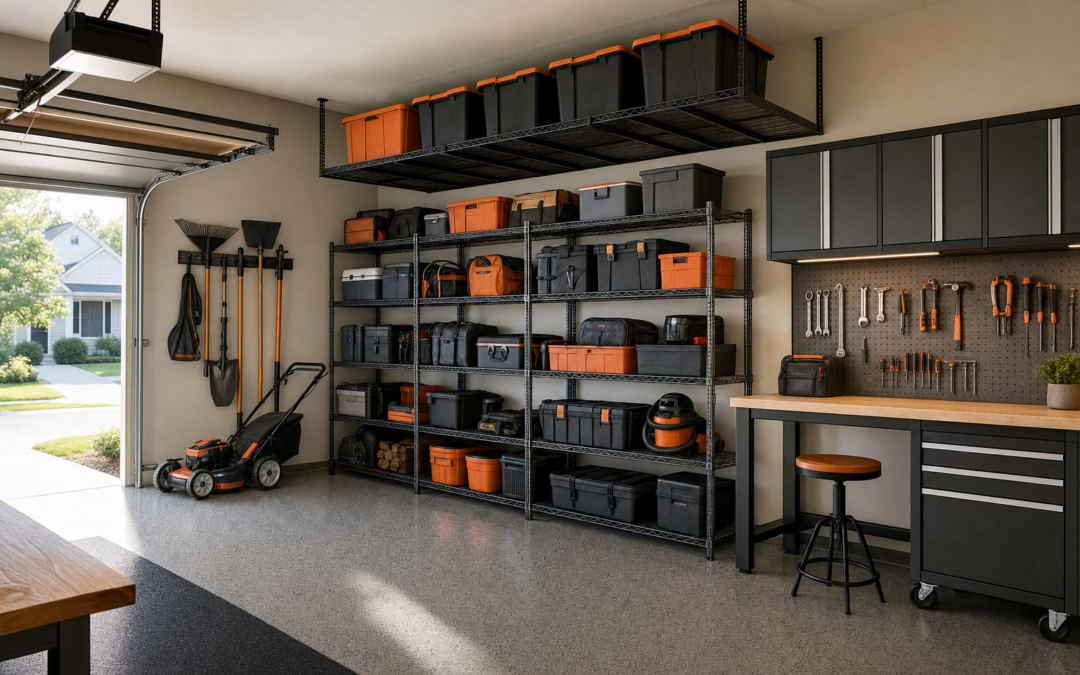
Most garage storage projects fail for the same reason: people buy shelves first and plan second. The result is a wall of mismatched racks, a floor still crowded with bins, and trip hazards that never went away. This guide flips that order. You will map zones, match capacity to real loads, then choose systems that reclaim floor space and keep walking paths clear.
Below you will find a practical buying framework for wire shelving, overhead ceiling racks, lockable cabinets, and workbenches—plus safety checks and recommended setups by garage size. When you are ready to compare specific models, every major section links to our live product reviews and our Garage Storage hub.
Why Garage Storage Usually Falls Short
Garages absorb everything the house rejects: seasonal decor, sports gear, paint, lawn chemicals, tools, and the “we might need this” pile. Without a plan, every new purchase lands on the floor. Floor piles create three problems at once: you cannot park, you cannot walk safely, and you cannot find what you need without digging.
The fix is not one heroic shelf unit. It is a layered system:
- Floor-clearing storage for bulky, infrequent items (ceiling racks, high shelves)
- Daily-access storage for tools and supplies you grab weekly (mid-height shelves, workbench)
- Secure storage for chemicals, sharp tools, and anything kids or pets should not reach (cabinets)
- Open wire racks for bins and bulky goods that need airflow and visibility
Treat this article as the blueprint. Then use our reviews to pick the exact hardware for each layer.
Plan Before You Buy: Zones, Weight, and Clearances
Spend thirty minutes measuring and you will save money and return trips. Sketch your garage footprint, mark the vehicle envelope, and note door swings for the house, garage door, and any side door.
Define activity zones
- Vehicle zone: Keep at least the width of your car plus opening doors clear. Storage along the long side walls is usually safest.
- Workshop zone: Workbench plus tool storage within arm’s reach. Leave standing room in front of the bench.
- Sports / seasonal zone: Tall items (bikes, skis, ladders) near an exterior door when possible.
- Hazard zone: Paint, solvents, fertilizers, and fuels in a lockable cabinet away from heaters and outlets.
- Overflow / archive zone: Holiday bins and rarely used items on ceiling racks or top shelves.
Check weight ratings honestly
Manufacturer capacities assume even loading on a correctly assembled unit anchored as directed. A “1,500 lb” shelf unit does not mean one shelf holds 1,500 lb. Divide capacity across shelves, keep heavy items low, and never exceed the per-shelf rating printed in the manual.
For ceiling racks, capacity depends on joist structure as much as the rack. If joists are damaged, undersized, or inaccessible, do not mount heavy overhead storage until you reinforce or relocate.
Measure ceiling height and vehicle clearance
Overhead racks need clearance above the tallest vehicle (including roof racks) and below the lowest obstruction (garage door tracks, lights, openers). A common rule of thumb is several inches of buffer beyond your tallest parked profile. Measure with the garage door fully open and closed so tracks and torsion hardware do not surprise you.
Floor vs wall vs ceiling
- Floor units are fastest to install and easy to rearrange, but they consume parking width.
- Wall-mounted shelves and fold-down benches protect floor space and keep walkways open.
- Ceiling racks reclaim the most unused cubic feet for seasonal bins—if structure and clearance allow.
Wire Shelving Systems: The Workhorse of Garage Organization
Wire shelving remains the default garage upgrade for good reasons: it is affordable, ventilated (less mildew on cardboard and soft goods), visible at a glance, and modular. Look for steel wire with a powder coat or zinc finish, adjustable shelf heights, and foot plates that level on uneven concrete.
What to look for
- Per-shelf and total capacity that match your heaviest bins (paint cans, tile boxes, tool totes).
- Adjustability so tall tools and short totes share the same footprint.
- Footprint fit along a side wall without blocking door swings.
- Leveling feet for garage slabs that slope toward the door.
- Optional liners if you store small parts that can fall through wire gaps.
Two strong starter options from our catalog cover everyday wire shelving and a heavier adjustable rack for denser loads.
Product pick: Amazon Basics 4-Shelf Steel Wire Storage Shelves

Amazon Basics 4-Shelf Steel Wire Storage Shelves — A clean, no-drama starter rack for labeled bins, household overflow, and light tools. Ideal when you want open visibility along a side wall without committing to a full cabinet wall.
Product pick: Amazon Basics Adjustable Heavy-Duty Steel Wire Rack

Amazon Basics Adjustable Heavy-Duty Steel Wire Rack — Choose this when loads get denser: cases of fluids, stacked totes, or shop supplies that punish lighter shelves. Adjustable shelves help you tune height for oddball tools.
Pro tip: put the heaviest bins on the lowest shelf, keep a 12–18 inch clear strip in front of the unit for a step stool, and label bin ends facing the aisle. Wire shelves only stay useful if every tote has a home.
Overhead and Ceiling Racks: Reclaim Cubic Feet You Already Own
Ceiling space above parking bays is the most underused real estate in American garages. Overhead racks excel at seasonal bins, camping gear, coolers, and bulky soft goods—items you need a few times a year, not every weekend.
When overhead storage makes sense
- You have solid ceiling joists (or can mount into them with the hardware specified).
- Your tallest vehicle plus roof accessories still clears the lowest rack point.
- You can reach the rack safely with a stable ladder or step platform—not by standing on a rolling chair.
- You will store sealed bins, not loose liquids that can drip onto a vehicle finish.
Skip ceiling racks if your garage door hardware occupies most of the ceiling plane, if joists run the wrong direction without a safe mounting plan, or if you need daily access to those items.
Product pick: 4×8 ft Overhead Garage Storage Rack (750 lb)
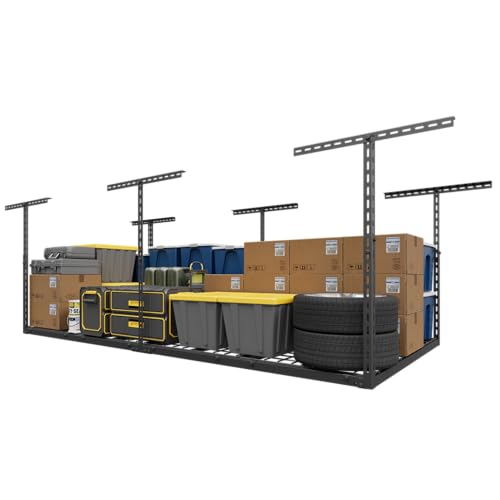
4×8 ft Overhead Garage Storage Rack (750 lb capacity) — A large platform for holiday totes and camping gear that should leave the floor entirely. Size and beam design matter here: a true 4×8 footprint stores more than two shorter racks while keeping weight distributed.
Install tip: dry-fit the frame on the floor, mark joist centers carefully, and load the rack gradually while watching for deflection. Keep the heaviest bins near the support posts, not at mid-span.
Cabinets and Locked Storage: Hide Hazards, Reduce Clutter Visual Noise
Open shelving is great for labeled bins. It is a poor place for pesticides, solvents, sharp blades, and anything that looks like treasure to a toddler. A metal storage cabinet with doors (and preferably a lock) closes that gap while giving your garage a cleaner look.
Cabinet buying checklist
- Steel gauge and shelf capacity for paint cans and tool cases.
- Lockable doors if children or guests use the garage.
- Depth that fits against a wall without blocking walkways (often 16–18 inches).
- Height that uses vertical space without interfering with garage door tracks.
- Leveling on sloped slabs so doors close squarely.
Product pick: INTERGREAT Black Metal Storage Cabinet

INTERGREAT Black Metal Storage Cabinet — A tall enclosed cabinet for chemicals, small tools, and anything you want out of sight. Doors cut visual clutter and help you keep hazardous products off open wire shelves.
Store flammables according to local code and product labels. Cabinets organize access—they do not replace proper ventilation or fire-safe practices for large quantities of fuel.
Workbenches as Organization Hubs
A workbench is not only a place to saw and assemble. In a well-planned garage it becomes the command center: charging station, project landing pad, and home for the tools you use most. Without a bench, projects migrate to the hood of a car or the kitchen table—and parts scatter across the floor.
Fixed, rolling, or folding?
- Rolling benches move out of the way for parking but need quality casters and a lock.
- Fixed benches feel most solid for heavy work but permanently claim footprint.
- Wall-mounted folding benches shine in one-car and shared-use garages: deploy when you work, fold flat when you park.
Product pick: Wallmaster Wall-Mounted Folding Workbench

Wallmaster Wall-Mounted Folding Workbench — Best when parking space is non-negotiable. Mount into studs, fold it down for projects, and reclaim the bay when you are done. Pair it with a nearby cabinet or pegboard so tools do not end up on the floor again.
Mount any folding bench only into solid framing with the fasteners the manufacturer specifies. Hollow drywall anchors are not enough for a loaded work surface.
Safety and Installation Mistakes to Avoid
Garage injuries often come from falling objects, unstable ladders, and blocked exits—not from exotic tools. Build safety into the storage plan:
- Do not overload top shelves. Heavy up high is how racks tip and bins rain down.
- Anchor tall units when the manual calls for wall ties, especially in earthquake or kids-present households.
- Keep a clear egress path from the house door to the exterior. Storage should never block exit.
- Respect garage door hardware. Never hang loads from tracks, springs, or opener rails.
- Separate chemicals from heat sources and from food/beverage coolers.
- Use a proper ladder for ceiling racks; do not climb wire shelves.
- Wear eye protection when drilling concrete or overhead into joists—debris falls straight at your face.
- Check weight ratings after assembly. Missing braces and loose bolts silently erase capacity.
If you are unsure about joist size, concrete anchors, or electrical clearances, hire a handyman for the mounting phase. Hardware is cheap compared with a cracked windshield or a trip to urgent care.
Recommended Setups by Garage Size
One-car garage (tight but fixable)
Prioritize vertical and fold-away solutions. Place one heavy-duty wire rack along the long wall opposite the house door, add a lockable cabinet for chemicals, and use a wall-mounted folding workbench so the car still fits. If ceiling clearance allows, a single overhead rack above the hood area stores seasonal bins. Avoid deep floor cabinets on both sides—you will lose door swing.
Two-car garage (the sweet spot)
Run wire shelving along one side wall for bins and household overflow. Put a metal cabinet near the house entry for hazardous products. Mount a workbench on the remaining side or rear wall. Use one or two ceiling racks over the parking bays for holiday and camping totes. Leave the center aisle open for walking and trash/recycling carts.
Three-car or oversized garage
Zone more aggressively: workshop bay with bench and tool storage, household overflow bay with wire racks and cabinets, and vehicle-only bay kept nearly empty. Multiple ceiling racks can archive seasonal items without touching the floor plan. Consider repeating the same wire rack model so shelves and bins stay interchangeable.
A simple starter kit that scales
- One everyday wire shelf unit for labeled bins
- One heavy-duty adjustable rack for denser loads
- One overhead rack for seasonal overflow
- One lockable metal cabinet for hazards
- One folding or rolling workbench as the project hub
That five-piece stack maps directly to the product reviews linked in this guide and to the broader catalog on our Garage Storage category page.
FAQ: Garage Storage Ideas and Systems
1. What is the best garage storage system for beginners?
Start with one quality wire shelving unit and a set of matching bins. Get everything off the floor that you can, label the bins, then add a lockable cabinet for chemicals. Ceiling racks and workbenches come next once pathways are clear.
2. Are overhead garage storage racks safe?
They are safe when mounted into solid structure with the specified hardware, loaded within the rated capacity, and kept clear of vehicle roofs and garage door equipment. They are not safe when hung from drywall alone, overloaded at mid-span, or installed without measuring clearance.
3. Should I choose wire shelves or closed cabinets?
Use both. Wire shelves win for visibility, airflow, and bulky bins. Closed cabinets win for hazardous products, dust-sensitive tools, and a tidier look. Most garages need open storage for volume and closed storage for risk control.
4. How do I keep garage storage from blocking my car?
Measure the vehicle envelope including open doors, keep deep storage on long walls only, prefer folding workbenches, and move seasonal items to the ceiling. Tape a parking outline on the floor for a week before you buy—that visual stops oversized purchases.
5. What should never go on open garage shelves?
Keep pesticides, strong solvents, fuels, sharp blades, and anything attractive to children in a lockable cabinet. Also avoid storing loose liquids directly above vehicles on ceiling racks.
Next Steps: Build Your System, Then Pick Specific Products
A cleaner, safer garage is less about buying more stuff and more about giving every category a permanent home. Map your zones, clear the floor, then layer wire shelving, overhead racks, cabinets, and a workbench that fits how you actually use the space.
Ready to compare models? Browse our full Garage Storage collection for reviews, specs, and current options—or jump straight into the picks linked above for wire shelves, ceiling racks, cabinets, and workbenches.
Measure twice, load heavy items low, and leave yourself a clear path to the door. That is the difference between a storage project that lasts and another pile that creeps back onto the concrete.