
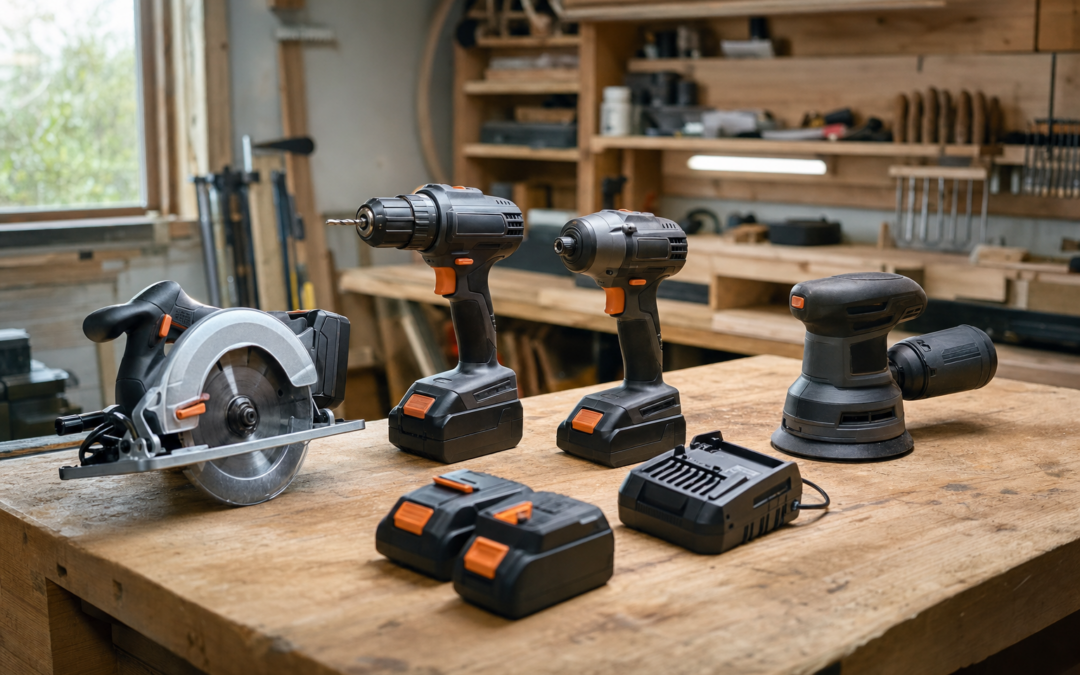
A starter power tool kit should cover about 80% of home projects without filling a van. That means a thoughtful buy order—not a random Black Friday pile of orphan batteries. This 2026 guide prioritizes a drill/driver, a saw path, a sander, and an impact strategy, with one battery ecosystem as the backbone and budget tiers that stay honest.
When you want to zoom into a single tool type, use our Power Tools hub. Here we sequence purchases so each dollar unlocks the next project.
The 80% Job List for Homeowners
Most houses need to hang things, assemble furniture, cut boards and occasional sheet goods, prep paint and refinish small furniture, and drive outdoor screws. Translate that into tools:
- Drill/driver — holes and controlled screws
- Circular saw or miter saw — cutting lumber and panels (pick based on project mix)
- Random-orbit sander — prep and refinish
- Impact driver — high-volume fastening when you outgrow the drill for decks and fences
Hand tools still matter: tape measure, level, square, hammer, pliers, utility knife. Power tools amplify a basic hand kit; they do not replace measuring discipline.
Buy Order That Prevents Orphan Gear
Step 1: Drill/driver kit on a major platform
Buy a complete kit with battery and charger. This is the foundation. Prefer an 18V/20V compact class if you expect growth into saws and lights. Consider 12V only if you are sure work stays light and indoor.
Step 2: Cutting tool matched to projects
Deck and plywood → circular saw. Trim-heavy → miter saw. If unsure and budget is tight, a circular saw covers more emergency cuts per dollar for general DIY.
Step 3: Sander for surfaces
A corded random-orbit sander is a workhorse even in a cordless-heavy shop. Add cordless sanding later if you already own piles of batteries.
Step 4: Impact driver
Add when screw volume justifies it. Same batteries as the drill whenever possible.
Resist specialty tools (plate joiners, track-saw mega kits, twin-battery demo saws) until the core four roles are covered.
One Battery Ecosystem Beat Three “Bargains”
Every orphan charger steals shelf space and future money. Pick DEWALT 20V MAX, Milwaukee M18, Ryobi ONE+, Makita LXT, or another widely supported line—and stay there for cordless tools. Mixing brands is acceptable for corded sanders and corded circular saws; it is painful for batteries.
Two batteries minimum for the platform. Label them. Charge after projects so the next job starts ready.
Budget Tiers for 2026
Tier A — Essential (~one focused shopping trip): drill/driver kit + basic bit set + hand measuring tools. You can now hang, assemble, and repair.
Tier B — Project ready: add circular saw (or miter) + blades + work support (sawhorses).
Tier C — Finish capable: add random-orbit sander + disc grit sequence + dust solution.
Tier D — Fastening volume: add impact driver + impact-rated bits.
Spend on blades, bits, and dust control before upgrading to boutique brushless versions of tools you barely use.
Product Callouts: Starter-Kit Building Blocks We Review
Use these reviews as modular pieces: start with a drill kit, add a cordless circular on a compatible path, bring in a corded sander, add an impact when needed, or choose a light 12V drill if your scope stays small.

DEWALT 20V MAX* Cordless Drill/Driver Kit with Screwdriver/Drill Bit Set — Make this your first purchase if you need holes and controlled driving immediately—a complete 20V kit with bits gets a household useful on day one.

DEWALT 20V MAX XR Brushless Cordless 7-1/4 in. Circular Saw — Add a cordless circular saw on the same DEWALT platform when sheet goods and deck boards appear on the project list—mobility without a second charger ecosystem.

Makita BO5041K 5″ Random Orbit Sander — Bring in a corded random-orbit sander for furniture and paint prep; sanding hours are where corded still earns its keep in a starter shop.

Makita XDT11Z 18V LXT Lithium-Ion Cordless Impact Driver — Add an 18V impact when screw volume climbs—even if your drill is DEWALT, some shops mix carefully, but ideally keep impacts on the same batteries as your drill long-term.
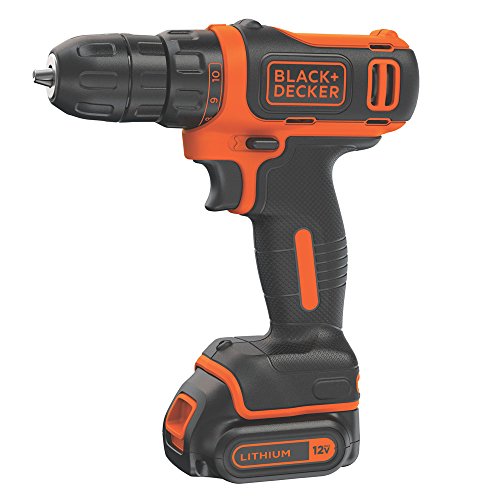
BLACK+DECKER 12V MAX Cordless Drill/Driver — Ultra-light 12V alternative if your projects stay small and you want minimum weight—know you may outgrow it if decks and thick lumber arrive.
Platform Notes Without a Brand Holy War
Homeowners succeed on any major platform that has local retail support and ongoing battery sales. Your decision factors should be: kit contents today, weight in your hands, and whether the brand’s next tools (saw, light, blower) interest you. Forum loyalty is a weak reason to ignore a complete kit that fits your budget and projects.
If family members already own a platform, join it. Shared batteries are a household multiplier.
Storage and Charging Setup
Give the starter kit a home: a shelf or small rolling cart near an outlet, not the floor under a leaking water heater. Keep silica packs out of open battery vents, but do keep packs clean and dry. A power strip with some surge protection for chargers is reasonable; daisy-chaining random extension cords is not.
Hang saws with guards intact. Store sanding discs flat. Bits in a thin organizer beat a coffee can of mystery steel.
Skills Order Matches Tool Order
- Learn clutch settings and pilot holes with the drill
- Learn support and kickback awareness with the circular saw (or fence discipline with a miter saw)
- Learn grit progression with the sander
- Learn tip match and controlled triggers with the impact
Watch one reputable technique video per tool, then practice on scrap. Consuming twenty reviews without cutting scrap helps less than one careful practice hour.
What Not to Buy First
- Giant tool chests with no tools selected for your projects
- Three competing battery brands “because they were on sale”
- A table saw before you have measuring habits and space
- Specialty plumbing or automotive power tools unrelated to your actual list
- The absolute cheapest no-name kits with unobtainable batteries
Safety Starter Stack
- Safety glasses in every tool bag
- Hearing protection for saws and impacts
- Dust mask/respirator for sanding and cutting sheet goods
- Gloves when appropriate—but not near spinning blades where they catch
- GFCI awareness outdoors and in garages
Read the manuals once. Guards exist for reasons that become obvious only after an incident—keep them on.
Sample Kits by Household Type
Apartment / light condo DIY
12V or compact 18V drill kit, hand tools, maybe a small oscillating multi-tool later. Skip large saws until you have a workshop space; use cut services at lumber yards for sheet goods.
Suburban house with deck dreams
18V/20V drill kit, cordless or corded circular saw, impact driver, sander for rail refinishing. Budget for blades and outdoor extension discipline.
Trim and furniture restorer
Drill kit, miter saw path, corded random-orbit sander first-class, impact optional.
Maintenance Calendar
Monthly: inspect cords, clean chucks, check guards. Seasonally: refresh blades and bits, verify battery health, vacuum dust out of sander vents. Annually: honest audit—donate or sell tools that do not match your projects instead of hoarding guilt metal.
Space Planning: Where the Kit Lives
A starter kit fails when it has no home. Claim a four-foot stretch of wall or a single rolling cart before tools arrive. Chargers need outlet access. Saws need a clear path to the door for outdoor cutting. Sanders need vac hose reach. If the only storage is “on the hood of the car,” you do not own a kit—you own garage friction.
Pegboard is fine for hand tools; power tools often prefer shelves and totes so batteries are not hanging by their ports. Keep a small parts bin for chuck keys (if any), hex wrenches that came with saws, and spare guard screws. Those little pieces vanish once and then the tool feels cursed.
Learning Projects That Build Skill in Order
- Install a shelf with proper anchors and a level—drill skills
- Build a simple sawhorse or cut shelf panels—saw skills
- Refinish a thrift stool or sand a door slab—sander skills
- Replace fence boards or build a planter box with many screws—impact skills
Each project validates the last purchase and reveals gaps honestly. Buying an impact before you have ever drilled a pilot hole skips the foundation.
Consumables Budget: The Silent Half of Cost
Blades, discs, bits, glue, fasteners, and PPE add up. Expect to spend a meaningful fraction of the tool price on consumables in year one if you actually build things. Dull blades make good saws feel weak. Starved grit progressions make sanders leave swirls. Factor consumables into the “starter kit” total so you are not surprised.
Buy fasteners matched to the outdoor rating you need. Interior drywall screws outdoors are how projects rust and fail. The impact will happily drive the wrong screw quickly—speed without material wisdom is still a mistake.
When to Borrow, Rent, or Hire
Specialty tools used once—deep excavation gear, large floor sanders, specialty tap and die sets—are often better rented or hired. Your starter kit should be the tools you touch monthly. Pride of ownership is expensive when the tool sleeps for five years while batteries age.
Borrowing a neighbor’s table saw can be smart; returning it dull and misaligned is how neighborhood trust dies. If you borrow, offer new blades or beer and time, and learn the tool’s quirks before cutting heirloom plywood.
Expanding Beyond the Core Four
After drill, saw, sander, and impact, common upgrades include: oscillating multi-tool for cuts in place, jigsaw for curves, random shop vac if you lack dust control, work light on the same battery platform, and a compact router much later. Each addition should map to repeated tasks. A tool that solves one afternoon is a candidate for borrow/rent unless it is cheap and small.
Document serial numbers and keep receipts digitally. Warranty claims are easier when you can prove purchase dates. Register tools if the brand makes it painless.
Family and Roommate Agreements
Agree on who can use what, where PPE lives, and how batteries are returned. A shared kit without norms becomes a dead-battery tragedy. If one person is the primary builder, still teach others basic safety so emergency fixes do not wait for a single gatekeeper—unless that is an explicit household choice.
Write a one-page “shop rules” card: eye protection, unplug when changing blades, no tools on stairs, label packs. Tape it inside a cabinet door. Boring rules prevent exciting injuries.
Field Notes From Real Garage Constraints
Real garages are cold in winter, hot in summer, and short on outlets. Plan extension cords rated for the tool load, keep cords out of blade paths, and do not run undersized cords that starve motors. Seasonal humidity warps lumber stored on concrete—sticker your boards and let them acclimate before critical cuts or finish sanding.
Lighting changes perceived quality. Add a bright shop light before you blame tools for wandering holes or missed layout lines. A $30 lighting improvement often upgrades every tool you already own. Keep a broom and vac habit so sawdust does not turn into a slip plane under a miter stand.
When storage is tight, vertical holsters and wall hooks beat floor piles. A charged battery on a known shelf is a project multiplier; a buried kit under holiday bins is how DIY weekends die. Revisit your layout each season as projects change—deck season wants different access than interior paint season.
Finally, write down what you bought and why. Six months later you will forget which battery platform you chose and why the corded sander was intentional. A simple note in your phone prevents duplicate purchases when a flashy kit goes on sale in a competing chemistry.
Measuring Success After Ninety Days
A starter kit is working if you complete projects without borrowing the basics weekly, batteries are charged when you reach for them, and you are not blocked by missing blades or bits. It is failing if tools still live in shipping boxes, or if you bought three platforms and cannot find a matching charger.
Do a ninety-day review: Which tool earned its keep? Which consumables ran out first? What project is next, and does it require a new tool or only better accessories? Often the next purchase is a better blade, a second battery, or a shop vac—not a fifth power tool.
Photograph your kit layout once it works. When the garage slides back into chaos after holiday storage, you have a reference for the reset. Continuous organization is part of owning power tools; the machines do not organize themselves.
If you outgrow a 12V drill into decks and thick lumber, sell or gift it and consolidate into the 18V/20V line you are expanding. Holding every past tool “just in case” creates a museum. Keep what matches the platform you are building; recycle packs properly when they die.
Keep written cut lists and fastener counts before shopping days. Overbuying specialty screws “in case” clutters bins; underbuying mid-project wastes momentum. A simple notepad in the kit tote prevents both. Review manufacturer instructions for each tool once, then store manuals digitally so the paper copies can live in a single envelope instead of scattering.
FAQ: Starter Power Tool Kits
What is the first power tool I should buy?
A cordless drill/driver kit with battery and charger.
Do I need an impact immediately?
No. Add it when you drive fasteners in volume.
Circular or miter saw second?
Circular for sheets and general DIY; miter for trim-focused work.
Should everything be cordless?
Cordless is great for drills, impacts, and mobile saws. Corded sanders (and sometimes corded circular saws) remain smart starter choices.
How many batteries?
Two is the practical minimum for a platform you use weekly.
Next Steps
Write your next five home projects. Map each to drill, saw, sander, or impact. Buy in that order on one battery ecosystem, and use the reviewed building blocks above to compare specific models.
Keep exploring tools in our Power Tools hub. A starter kit is a sequence—not a pile—and the right sequence makes every later upgrade obvious.