
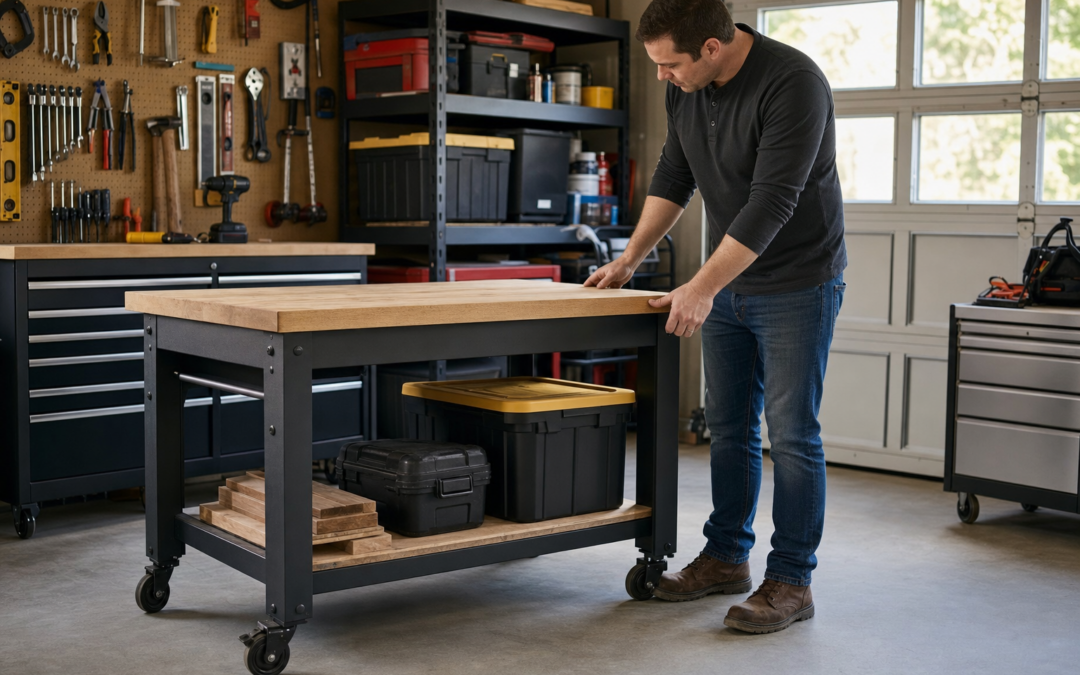
Shopping for a workbench for your garage can feel overwhelming, especially when you’re trying to balance size, weight capacity, and mobility. Whether you’re an occasional DIYer or working on projects every weekend, the right workbench can make your garage more functional and organized. This guide focuses on the key factors to consider when buying a workbench—not storage, but the bench itself—so you can select the right surface to support your work and fit your space.
There’s more to a garage workbench than just a flat top. From choosing the right dimensions to understanding weight limits and deciding if you need a mobile or stationary bench, every detail matters. Below, we’ll break down the essential criteria, highlight top-rated options, and help you feel confident in your purchase decision.
For more general advice on home improvement buying decisions, check out our complete buyer guides hub.
Understanding the Importance of Workbench Size
The first step in selecting a workbench is determining what size will actually fit your garage and suit your projects. Workbenches come in a range of lengths, widths, and heights. The right size depends on your available space and the type of work you plan to do.
- Length: Most garage workbenches range from 36 to 72 inches long. Measure the area where you plan to place the bench and account for clearance on all sides, especially if you’ll be moving around it or storing tools underneath.
- Width/Depth: A standard depth is about 24 inches, which provides enough space for most tasks. If you work on larger projects, look for benches up to 30 inches deep.
- Height: Standard workbench height is 34–36 inches, which works for most people. For tasks that require more precision, a taller bench may be better. If you’re tall or short, consider an adjustable-height model.
Take a moment to sketch your garage layout or use painter’s tape to outline the bench’s footprint on the floor. This simple step can help prevent regrets down the road.

CAMMOO Inch Garage Work Bench with Storage Review — Practical workbenches from CAMMOO, summarized from hub features and listed measurements. Key figures include 13.4, 4 , 2 .
Weight Capacity: How Much Should Your Workbench Hold?
One of the most overlooked features of a garage workbench is its weight capacity. If you plan to use heavy tools, engines, or woodworking vises, a lightweight bench may not be up to the task. Manufacturers usually list a maximum weight limit in pounds (lbs) — always check this before buying. Here’s how to interpret those numbers:
- Light Duty (up to 500 lbs): Suitable for crafts, electronics, or assembling small items.
- Medium Duty (500–1,500 lbs): Good for general DIY, automotive work, and woodworking.
- Heavy Duty (1,500–3,000 lbs): Best for mechanics, metalworking, or supporting large tools/machinery.
Never exceed the stated weight capacity. Overloading can lead to warping, instability, or even collapse, risking both your safety and your tools.

IGERI 39″ Heavy Duty Work Bench With Drawer and Storage for Garage Review — IGERI workbenches gear aimed at buyers who want clear specs before they click through. Key figures include 2000 LBS, 2000 lbs, 35.
Mobility: Fixed vs. Rolling Workbenches
Mobility is a key feature for many garage users. Some benches are stationary, while others have wheels (casters) for easy movement. Consider your workflow:
- Stationary Benches: Offer maximum stability and higher weight limits. They’re ideal if you have a permanent workspace.
- Mobile Benches: Perfect if you need flexibility—move your workbench to different areas or tuck it away when not in use. Look for locking casters to keep the bench steady during use.
If you share your garage with vehicles or need to rearrange the space for different projects, a rolling workbench can make life much easier. However, mobility may come at the cost of maximum weight capacity or rock-solid stability, so weigh your priorities.
Workbench Top Materials: Pros and Cons
The surface of your workbench affects durability, maintenance, and the types of projects you can tackle. Here are the main types of workbench tops you’ll find:
- Solid Wood (usually hardwood): Gentle on tools, easy to refinish, and ideal for woodworking, but can dent or stain with heavy use.
- Laminate or MDF: Smooth and affordable, but less durable for heavy-duty work or exposure to liquids/solvents.
- Steel: Extremely rugged, resists chemicals and fire, but can be noisy and may damage delicate tools or workpieces.
- Plastic/Composite: Lightweight, resistant to moisture and chemicals, but generally for lighter tasks.
If you handle a variety of projects, consider a bench with a replaceable top or protective mats to extend its life.

Northsky 48″ Garage Workbench with Light & Storage 3D Printer Work Table Review — A NORTHSKY pick in Workbenches that focuses on real-world usability Key figures include 48, 23.6, 1.
Choosing the Right Storage Features
While this guide isn’t focused on garage storage, built-in features like drawers, shelves, and pegboards can make your workbench more practical. Evaluate your needs:
- Drawers: Keep hand tools and small parts organized and within reach.
- Shelves: Store larger items or toolboxes below the bench.
- Pegboards or Hooks: Hang frequently used tools for easy access.
- Power Strips and Lighting: Some workbenches integrate outlets or even task lights for added convenience.
Think about your workflow. If you’re constantly searching for tools, a bench with integrated storage can save time and reduce frustration.
Assembly and Installation: What to Expect
Most workbenches ship flat-packed and require some assembly. Before you buy, check the assembly requirements and read reviews for feedback on the process. Here are some tips to keep in mind:
- Tools Needed: Basic hand tools (wrenches, screwdrivers, maybe a drill) are usually sufficient.
- Time Commitment: Expect anywhere from 30 minutes to several hours, depending on complexity and features.
- Instructions: Look for models with clear, illustrated manuals. Online videos can be a lifesaver if the included instructions are lacking.
- Anchoring: For stationary benches, you may need to anchor the legs to the floor or wall for maximum stability, especially in earthquake-prone areas.
If you’re not comfortable assembling furniture or lack the necessary tools, consider hiring a handyman or asking a friend for help.
Workbench Height and Ergonomics
Comfort is critical for long projects. A bench that’s too high or too low can cause back and shoulder strain. Here’s how to find the right height:
- Standard Height: 34–36 inches works for most users standing upright.
- Sitting Height: If you prefer sitting, look for benches around 30 inches high or adjustable-height options.
- Custom Fit: Ideally, your forearms should be parallel to the surface when working. If you’re between sizes, choose a slightly taller bench—you can always add a footrest or anti-fatigue mat.
Some higher-end workbenches allow you to adjust the height, which is handy for households with multiple users or for switching between standing and sitting tasks.
Workbench Placement and Garage Workflow
Think about how your new workbench will fit into the overall flow of your garage. Will it block access to your car, storage shelves, or doors? Here are some placement tips:
- Near Power Sources: Place your bench close to electrical outlets if you’ll use power tools or chargers.
- Lighting: Good overhead lighting—or a bench with built-in lights—can reduce eye strain and improve precision.
- Ventilation: If you work with paints or solvents, set up near a window or install a fan for proper airflow.
- Tool Access: Keep the bench close to your main tool storage to minimize walking back and forth.
Before assembling your bench, do a “dry run” by placing boxes where it will go—walk around and simulate your usual tasks to confirm the setup works for you.
Budget Considerations: What to Expect at Different Price Points
Workbench prices vary widely based on size, material, and features. Here’s a general breakdown:
- Under $200: Basic benches, often with MDF or particleboard tops, suitable for light-duty work. May lack storage or adjustability.
- $200–$500: Mid-range models with better materials (solid wood, steel frames), more weight capacity, and some built-in storage.
- $500 and up: Heavy-duty, professional-grade benches with large work surfaces, thick hardwood or steel tops, extensive storage, and premium hardware.
Don’t automatically go for the cheapest option—consider how often and for what tasks you’ll use your workbench. Investing a little more can mean better durability and a more pleasant workspace.
Popular Workbench Styles for Garages
There are a few common workbench designs you’ll see in the garage category. Understanding the differences can help you choose the right fit:
- Traditional Workbenches: Simple, sturdy, often made of wood or steel. Great for general tasks.
- Workbench with Storage: Include drawers, shelves, or cabinets. Ideal for keeping tools organized and the workspace clutter-free.
- Folding or Portable Workbenches: Collapse for easy storage or transport. Useful for small garages or on-the-go projects but usually have lower weight limits.
- Adjustable Height Benches: Offer ergonomic flexibility, especially if you switch between sitting and standing.
- Integrated Lighting Benches: Feature built-in LEDs or fluorescent lights—handy for tasks that require detail work.
Match the style to your primary needs. For example, a mechanic may need a steel-topped, heavy-duty bench, while a hobbyist woodworker might prefer a solid wood surface with integrated storage.

Pterying Garage Workbench with LED Light Bar Review — An editorial look at this Pterying option for workbenches — specs first, marketing second. Key figures include 600 Lb, 600 lbs, 12 .
Safety Considerations for Garage Workbenches
Safety should be top of mind when choosing and using your workbench. Here are some quick tips:
- Stability: Make sure the bench doesn’t wobble, especially when using heavy tools.
- Surface Condition: Smooth surfaces prevent splinters and damage to workpieces.
- Load Limits: Never overload your bench; distribute weight evenly.
- Electrical Safety: If your bench has built-in outlets or lighting, ensure it’s rated for garage use and protected from moisture.
- Clearance: Keep the area around the bench free of clutter to avoid trips and falls.
Inspect your workbench regularly for loose bolts, damaged surfaces, or other hazards. A little maintenance goes a long way in preventing accidents.
Frequently Asked Questions About Garage Workbenches
- How much weight does my bench really need to hold? Calculate the heaviest item you plan to place on the bench (like a bench vise, engine component, or tool chest), then add a safety margin of at least 20%.
- Is it worth paying more for an adjustable-height workbench? If you share the space or want to alternate between sitting and standing, yes. Otherwise, a fixed-height bench set to your comfort is usually sufficient.
- Do I need a bench with wheels? Only if you plan to move it regularly. For most people, a stationary bench is more stable and has a higher weight capacity.
- What if my garage floor isn’t level? Look for benches with adjustable feet or shims to level the work surface.
- Can I build my own workbench? Absolutely. If you have the tools and skills, DIY can save money and allow for full customization. Just be sure to follow proper plans and use quality materials.
Final Thoughts: Choosing the Best Workbench for Your Garage
The best garage workbench is one that fits your space, supports your projects, and matches your workflow. Before you buy, measure your available area, consider the heaviest tasks you’ll tackle, and decide if mobility or built-in storage matters to you. Take your time comparing features and reading reviews—many of the most popular workbenches are available with detailed specs and user feedback online.
Remember, this is an investment in your productivity and comfort. Don’t settle for a bench that’s “good enough” if you’ll be using it for years to come. By focusing on size, weight capacity, and mobility, you’ll set up your garage for success—no matter what project comes next.
Garage Workbench Buying Checklist
Before making your final decision, use this checklist to ensure you’ve considered all the essential factors:
- Measure Your Space: Do you have accurate measurements of your available garage area, including ceiling height and door clearance?
- Bench Dimensions: Have you selected a bench size that fits both your projects and your workspace?
- Weight Capacity: Does the bench support the maximum weight you expect to place on it (including tools, materials, and projects)?
- Material Quality: Is the workbench made from durable materials (solid wood, steel, etc.) suitable for your tasks?
- Mobility Needs: Do you require a stationary or mobile bench, and does your chosen model have lockable casters if needed?
- Adjustability: If multiple people will use the bench, is height adjustability important?
- Assembly Requirements: Are you comfortable assembling the bench, or do you need a pre-assembled or easy-to-assemble option?
- Budget: Does the bench fit your budget, factoring in any accessories or modifications you might want?
- Additional Features: Have you considered extras such as integrated power strips, vises, or tool racks?
Bringing this checklist with you—either physically or mentally—can save you from costly mistakes and make your purchase process smoother.
Common Mistakes When Buying a Garage Workbench
Even experienced DIYers can overlook key details when shopping for a workbench. Here are some of the most frequent mistakes to avoid:
- Ignoring Future Needs: Buying a bench that only fits your current needs may leave you wishing for more space or capacity as your projects grow. Try to anticipate future tools and tasks.
- Underestimating Weight Loads: Many buyers focus on surface area but forget to check weight ratings, leading to unsafe setups or damaged benches.
- Overlooking Mobility: If you work on cars or large projects, not having a mobile bench can make your workflow inefficient.
- Choosing the Wrong Height: A bench that’s too high or low can cause fatigue or discomfort. Always consider ergonomics and test different heights if possible.
- Not Checking Assembly Complexity: Some benches require extensive assembly, special tools, or multiple people. Read reviews and product manuals ahead of time.
- Skipping Surface Quality: A workbench with a rough, soft, or poorly finished surface can make precision tasks difficult and wear out faster.
- Forgetting About Storage Needs: While this guide focuses on the bench itself, think about whether you need drawers or shelves integrated into the design.
Avoiding these pitfalls can help you choose a bench that serves you well for years to come.
Workbench Maintenance Tips
Once you’ve invested in the right workbench, proper maintenance will keep it functional, safe, and looking good. Here are some tips for maintaining your garage workbench:
- Clean Regularly: Wipe down the surface after each use, especially if you work with oils, paints, or adhesives. Use a damp cloth for wood and a gentle cleaner for metal surfaces.
- Protect the Surface: Consider using mats or protective covers when performing heavy-duty work or when using chemicals to prevent stains and scratches.
- Tighten Hardware: Periodically check and tighten all bolts, screws, and casters to ensure stability and safety.
- Inspect for Damage: Look for cracks, warping, or loose joints in wood benches, and check metal frames for rust or corrosion.
- Lubricate Moving Parts: If your bench has drawers, wheels, or adjustable components, apply lubricant as needed to keep them operating smoothly.
- Refinish Wood Surfaces: If your workbench top is wood, sand and reapply finish or sealant as needed to maintain durability and resist moisture.
- Keep the Area Organized: Store tools and materials properly to prevent clutter, which can lead to accidental damage or unsafe working conditions.
Regular maintenance not only extends the life of your workbench but also ensures a safer and more enjoyable workspace.
Frequently Asked Questions About Garage Workbenches
How do I know what size workbench I need?
Start by measuring your garage space and considering the types of projects you’ll tackle. For general DIY, a 48- to 60-inch-long bench is a versatile choice. If you handle larger items or want more elbow room, go bigger. Remember to leave enough clearance around the bench for movement and tool storage.
Can I build my own workbench instead of buying one?
Absolutely! Many DIYers prefer to build their own workbench for complete customization. If you have basic carpentry skills and tools, you can tailor the size, height, and features to your exact needs. Just be sure to use sturdy materials and follow plans that specify adequate weight capacity.
What is the best material for a garage workbench top?
It depends on your work. Solid hardwood tops are durable and resist dents, making them great for woodworking. Plywood is affordable and easy to replace. Steel tops are best for heavy-duty or automotive work, as they resist oil and chemicals. Choose a material that matches your most frequent tasks.
How can I make my workbench more stable?
To increase stability, make sure the bench is level and securely assembled. For stationary benches, you can bolt the legs to the garage floor. For mobile benches, always use locking casters. Adding cross-bracing or reinforcing joints can also help prevent wobbling.
Are adjustable-height workbenches worth it?
If you share your workspace with others or switch between tasks that require sitting and standing, an adjustable-height workbench can boost comfort and productivity. Some models offer manual or electric adjustment—just check the adjustment range and weight capacity before buying.
How much should I expect to spend on a quality garage workbench?
Prices range widely depending on size, material, and features. A basic, sturdy bench may cost $150–$300, while heavy-duty or feature-rich models can run $500–$1,500 or more. Consider your needs and budget, and remember that a good bench is a long-term investment in your workspace.
What safety features should I look for?
Look for rounded edges, sturdy construction, and stable feet or locking casters. If you’ll be working with power tools, consider a bench with integrated power outlets and proper grounding. Always ensure your bench is rated to handle your intended loads and tasks.
Can I add a vise or other accessories later?
Most quality workbenches allow for aftermarket upgrades. Check that your chosen bench has a thick, sturdy top for mounting a vise, clamps, or tool racks. If you anticipate adding accessories, plan for this when selecting your bench.
Our content is researched and drafted with AI assistance and reviewed by our team. Product details come from published specs, manufacturer information and owner reviews.