
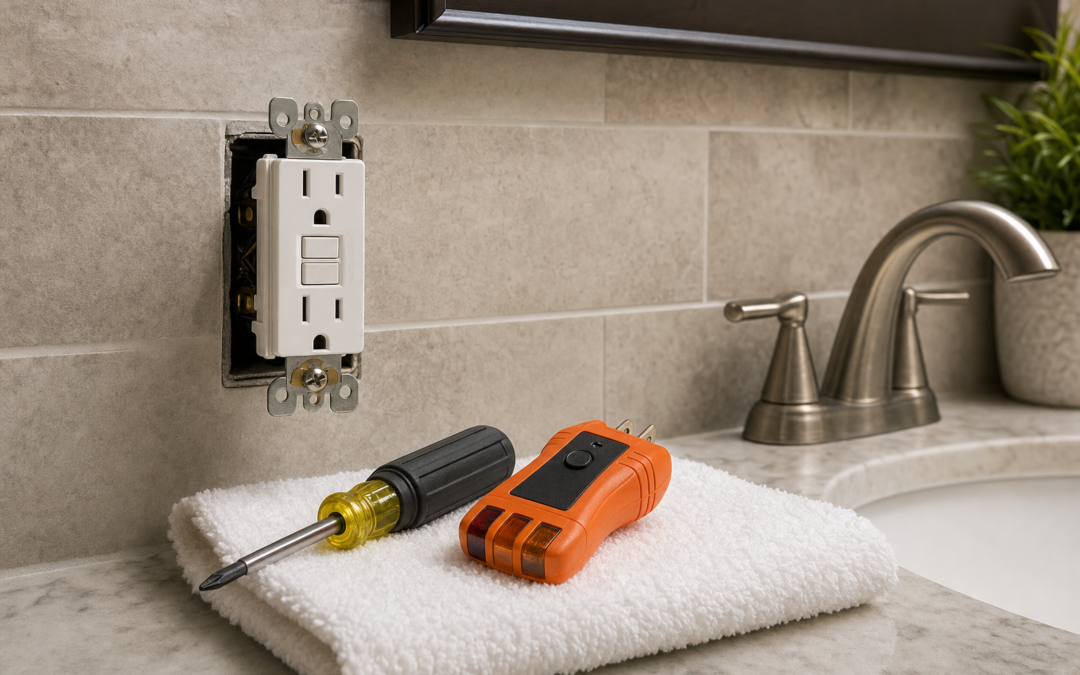
GFCI outlets protect people by cutting power when they sense a dangerous imbalance—exactly the kind of fault that happens around water. Kitchens, baths, laundry, garages, basements, and outdoor receptacles are common required locations. This guide explains where GFCIs belong, how to test them, and how to replace a receptacle safely—or when to stop and call an electrician.
More electrical DIY help lives in our Electrical hub. We stay practical: tester use, line versus load terminals, self-test devices, and the habits that keep wet-area power from becoming a shock hazard.
Where GFCIs Are Typically Required
Modern residential practice expects GFCI protection for receptacles near sinks, in bathrooms, outdoors, in garages, and in other damp or unfinished spaces. Exact rules depend on the code cycle your jurisdiction adopted and whether you are repairing versus remodeling. When you remodel a bath or kitchen, expect inspectors to want current protection even if the old house “never had it.”
Protection can be a GFCI receptacle or a GFCI breaker that covers the whole circuit. Downstream outlets can be protected by the LOAD terminals of an upstream GFCI device—if labeled correctly so the next owner understands the arrangement.
- Bathrooms: receptacles serving the room
- Kitchen counters: small-appliance receptacles
- Laundry, wet bars, utility sinks: nearby receptacles
- Garages, unfinished basements, outdoors: commonly required
- Crawlspaces and boathouses: treat as wet/damp specialty areas
How a GFCI Thinks
Hot and neutral current should match. If electricity finds another path—through a person to ground—the device trips in a fraction of a second. That is different from a surge protector or a simple fuse. A GFCI will not fix overloaded circuits; it addresses shock fault current.
Self-test GFCI receptacles periodically check their guts and may deny reset if they fail. That refusal is a feature. Replace the device rather than bypassing it.
Test Before You Trust
Press TEST—the reset button should pop and power should die on protected receptacles. Press RESET to restore. Repeat monthly. Also use a plug-in outlet tester with a GFCI test button to confirm wiring orientation and that the trip actually occurs.
If TEST does nothing, if RESET will not latch, or if the outlet tester shows open ground / reverse polarity, diagnose before you keep using the circuit. Miswired LINE/LOAD is a frequent DIY mistake that leaves faces “live” in confusing ways.

Klein Tools 80025 Outlet Tester Kit with GFCI Tester and Non-Contact — A kit that combines a receptacle tester, GFCI check, and non-contact voltage detection covers the three checks you should run before and after wet-area electrical work. Use it to prove a circuit is dead and to verify trips after replacement.

Klein Tools RT110 Outlet Tester — A compact three-light outlet tester is the pocket tool for spotting open grounds and reversed hot/neutral before you blame the appliance. Keep one in the kitchen junk drawer—you will use it more than you expect.
Replacing a GFCI Receptacle the Careful Way
Shut off the breaker and verify dead. Remove the wall plate and device screws. Photograph terminal positions. Note which wires were on LINE versus LOAD—usually LINE is power in; LOAD feeds downstream protection. White to silver, hot to brass, ground to green, unless the device instructions differ.
Trim damaged conductor ends, restrip clean copper, and tighten to the listed torque. Fold wires so the device sits flat without pinching. Restore power, press RESET, run TEST/RESET, and check downstream outlets you intended to protect.
If two cables enter the box and you cannot confidently identify LINE vs LOAD, hire an electrician. Energized trial-and-error on wet-area circuits is not a training exercise.

Leviton GFCI Outlet — A quality GFCI receptacle with clear LINE/LOAD markings is the standard wet-area upgrade when you are replacing a failed or missing protector. Prefer tamper-resistant devices in homes with children, and label downstream outlets when they are protected through LOAD terminals.
Symptoms That Mean Replace, Not Reset Forever
Constant trips with nothing plugged in can mean water intrusion, a failing device, or a downstream fault. Trips when a specific appliance runs may mean a leaky heating element (coffee maker, heater) rather than the outlet alone. Burning smells, brown scorch marks, or a device that will not reset are immediate replacement cues—and possibly a wider wiring inspection.
Never defeat a GFCI by installing a plain receptacle “just for now” in a location that needs protection.
Outdoor and Garage Extras
Use weather-resistant (WR) GFCI devices outdoors and in-use covers that protect plugs under rain. Garages often combine GFCI needs with busy tool loads—avoid sharing a single bathroom-style circuit with a freezer if nuisance trips would spoil food; ask an electrician about dedicated options.
Habits That Keep Electrical Upgrades Reliable
Once a quarter, test GFCI and AFCI devices with their built-in buttons and confirm protected outlets still trip correctly. Replace any device that will not reset or that trips with no load—do not tape over a problem. GFCI devices in baths and kitchens deserve a monthly TEST button press—especially before guests arrive or after any plumbing leak near receptacles.
Label breakers as you learn them. Photograph the panel directory after changes. Keep spare outlet testers, wire nuts, and a headlamp in a small kit so future work is safer and faster. Dust and heat shorten device life; leave ventilation space around dimmers and smart switches that run warm.
Seasonal storms are a good reminder to unplug sensitive electronics and confirm outdoor covers and weatherproof in-use lids still seal. A five-minute walk-through beats replacing water-damaged receptacles later.
Safety, Codes, and Know-Your-Limits
Turn off the correct breaker and verify the circuit is dead with a non-contact tester and an outlet tester before you touch wires. Lock the panel door or leave a note so nobody restores power while you work. If anything about the panel, bus bars, or main breaker feels unfamiliar, hire a licensed electrician—panel work is not a casual DIY project.
Match device ratings to the circuit (amps and voltage). Use the wire nuts or lever connectors specified for your conductor size. Do not force oversized devices into shallow boxes; pigtail and use a deeper box when needed. Local codes and permits matter for new circuits, kitchen/bath rewires, and outdoor work.
Stop and call a pro if you find aluminum branch wiring you were not expecting, burned insulation, melted devices, shared neutrals you cannot map, or a panel with no clear labeling. Guessing around live parts is how shocks and house fires start.
Buying Checklist
- Confirm whether you need a receptacle, breaker, or both strategies
- Choose TR and WR versions where appropriate
- Stock a plug-in tester and non-contact tester
- Plan labels for downstream protected outlets
- Budget an electrician if LINE/LOAD is unclear
FAQ: GFCI Outlets
Why does my GFCI trip in the rain?
Moisture in an outdoor box or a nicked cord can create a leakage path. Dry, inspect covers, and replace damaged cords.
Can one GFCI protect a whole circuit?
Yes, via LOAD terminals or a GFCI breaker—labeling matters so future work stays safe.
Is an old ungrounded outlet OK with GFCI?
GFCI can provide personnel protection even on some legacy wiring configurations when installed correctly and labeled per code guidance—but grounding and renovation rules vary. Get local advice for two-prong replacements.
GFCI vs AFCI?
Different jobs: GFCI for shock, AFCI for arc-fault fire risk. Some spaces need both strategies via combination breakers or layered devices.
Next Steps
Walk the house, list wet-area receptacles, test every GFCI, and replace failures promptly. Compare the gear above, then continue with related projects in our Electrical hub. Protected outlets should be boring: reset holds, test trips, appliances just work.
If you are renovating a bathroom, coordinate GFCI plans with the electrician before tile goes up. Moving boxes after finishes is misery. Teach family members what the TEST button does so a trip is not mistaken for a “broken outlet” forever.
Keep receipts and model numbers. Self-test requirements and indicator lights vary by generation—documentation helps when you troubleshoot years later.
Practical Notes for GFCI Outlet Guide
Keep receipts, warranty info, and a phone photo of model numbers in a home maintenance album. When a device fails years later, identity beats guesswork. Schedule a seasonal reminder to retest GFCIs, confirm breaker labels, and check that outdoor covers still seal after storms.
If you share the home with guests or renters, label the panel clearly and leave a one-page tip sheet in a kitchen drawer: how to shut off power, which receptacles are GFCI-protected, and when to call an electrician instead of resetting forever. Clear instructions prevent panicked mistakes.
Choose listed devices and fresh connectors over mystery bin parts. Compatibility mistakes and reused scorched wire nuts cost more time than the dollars you save.
Practical Notes for GFCI Outlet Guide
Keep receipts, warranty info, and a phone photo of model numbers in a home maintenance album. When a device fails years later, identity beats guesswork. Schedule a seasonal reminder to retest GFCIs, confirm breaker labels, and check that outdoor covers still seal after storms.
If you share the home with guests or renters, label the panel clearly and leave a one-page tip sheet in a kitchen drawer: how to shut off power, which receptacles are GFCI-protected, and when to call an electrician instead of resetting forever. Clear instructions prevent panicked mistakes.
Choose listed devices and fresh connectors over mystery bin parts. Compatibility mistakes and reused scorched wire nuts cost more time than the dollars you save.
Practical Notes for GFCI Outlet Guide
Keep receipts, warranty info, and a phone photo of model numbers in a home maintenance album. When a device fails years later, identity beats guesswork. Schedule a seasonal reminder to retest GFCIs, confirm breaker labels, and check that outdoor covers still seal after storms.
If you share the home with guests or renters, label the panel clearly and leave a one-page tip sheet in a kitchen drawer: how to shut off power, which receptacles are GFCI-protected, and when to call an electrician instead of resetting forever. Clear instructions prevent panicked mistakes.
Choose listed devices and fresh connectors over mystery bin parts. Compatibility mistakes and reused scorched wire nuts cost more time than the dollars you save.
Practical Notes for GFCI Outlet Guide
Keep receipts, warranty info, and a phone photo of model numbers in a home maintenance album. When a device fails years later, identity beats guesswork. Schedule a seasonal reminder to retest GFCIs, confirm breaker labels, and check that outdoor covers still seal after storms.
If you share the home with guests or renters, label the panel clearly and leave a one-page tip sheet in a kitchen drawer: how to shut off power, which receptacles are GFCI-protected, and when to call an electrician instead of resetting forever. Clear instructions prevent panicked mistakes.
Choose listed devices and fresh connectors over mystery bin parts. Compatibility mistakes and reused scorched wire nuts cost more time than the dollars you save.
Practical Notes for GFCI Outlet Guide
Keep receipts, warranty info, and a phone photo of model numbers in a home maintenance album. When a device fails years later, identity beats guesswork. Schedule a seasonal reminder to retest GFCIs, confirm breaker labels, and check that outdoor covers still seal after storms.
If you share the home with guests or renters, label the panel clearly and leave a one-page tip sheet in a kitchen drawer: how to shut off power, which receptacles are GFCI-protected, and when to call an electrician instead of resetting forever. Clear instructions prevent panicked mistakes.
Choose listed devices and fresh connectors over mystery bin parts. Compatibility mistakes and reused scorched wire nuts cost more time than the dollars you save.
Practical Notes for GFCI Outlet Guide
Keep receipts, warranty info, and a phone photo of model numbers in a home maintenance album. When a device fails years later, identity beats guesswork. Schedule a seasonal reminder to retest GFCIs, confirm breaker labels, and check that outdoor covers still seal after storms.
If you share the home with guests or renters, label the panel clearly and leave a one-page tip sheet in a kitchen drawer: how to shut off power, which receptacles are GFCI-protected, and when to call an electrician instead of resetting forever. Clear instructions prevent panicked mistakes.
Choose listed devices and fresh connectors over mystery bin parts. Compatibility mistakes and reused scorched wire nuts cost more time than the dollars you save.
Practical Notes for GFCI Outlet Guide
Keep receipts, warranty info, and a phone photo of model numbers in a home maintenance album. When a device fails years later, identity beats guesswork. Schedule a seasonal reminder to retest GFCIs, confirm breaker labels, and check that outdoor covers still seal after storms.
If you share the home with guests or renters, label the panel clearly and leave a one-page tip sheet in a kitchen drawer: how to shut off power, which receptacles are GFCI-protected, and when to call an electrician instead of resetting forever. Clear instructions prevent panicked mistakes.
Choose listed devices and fresh connectors over mystery bin parts. Compatibility mistakes and reused scorched wire nuts cost more time than the dollars you save.
Practical Notes for GFCI Outlet Guide
Keep receipts, warranty info, and a phone photo of model numbers in a home maintenance album. When a device fails years later, identity beats guesswork. Schedule a seasonal reminder to retest GFCIs, confirm breaker labels, and check that outdoor covers still seal after storms.
If you share the home with guests or renters, label the panel clearly and leave a one-page tip sheet in a kitchen drawer: how to shut off power, which receptacles are GFCI-protected, and when to call an electrician instead of resetting forever. Clear instructions prevent panicked mistakes.
Choose listed devices and fresh connectors over mystery bin parts. Compatibility mistakes and reused scorched wire nuts cost more time than the dollars you save.
Practical Notes for GFCI Outlet Guide
Keep receipts, warranty info, and a phone photo of model numbers in a home maintenance album. When a device fails years later, identity beats guesswork. Schedule a seasonal reminder to retest GFCIs, confirm breaker labels, and check that outdoor covers still seal after storms.
If you share the home with guests or renters, label the panel clearly and leave a one-page tip sheet in a kitchen drawer: how to shut off power, which receptacles are GFCI-protected, and when to call an electrician instead of resetting forever. Clear instructions prevent panicked mistakes.
Choose listed devices and fresh connectors over mystery bin parts. Compatibility mistakes and reused scorched wire nuts cost more time than the dollars you save.