
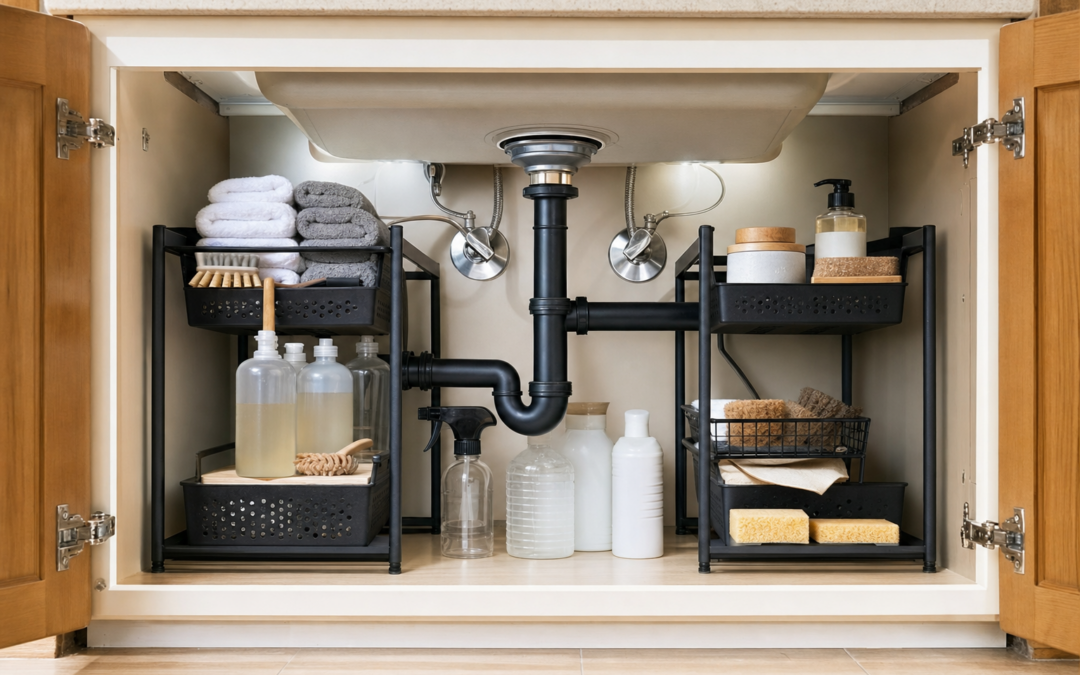
The cabinet under a kitchen sink is usually a chaotic mix of pipes, a disposal, cleaning bottles, and whatever fell off the door hooks. The right organizer works around the P-trap and supply lines instead of fighting them. This 2026 guide compares tiered racks, L-shaped units, and sliding drawers so you reclaim space without cutting plumbing.
More kitchen organization ideas live in our Kitchen Upgrades hub. Here we stay under the sink: measuring for fit, clearing around traps, and picking racks that slide instead of tip.
Measure the Obstacles First
Empty the cabinet. Sketch the trap, shutoff valves, disposal body, and any water filter. Measure clear width left and right of the trap, depth to the back wall, and height under the sink bowl. Many “universal” organizers need a U-shaped or L-shaped footprint precisely because the center is occupied.
Note door hinges and soft-close hardware that steal side clearance. If a slide-out needs a flat floor, check for warped cabinet bottoms or soft particleboard that needs a thin plywood shim first.
- Width each side of trap: often unequal
- Depth: leave room for the door and any pipe insulation
- Height: tall bottles vs stacked tiers
- Floor condition: level and dry before you load weight
- Disposal cord: keep organizers from pinching it
Tiered Racks vs L-Shaped Drawers
Simple two-tier racks maximize vertical space for sprays and refills. L-shaped designs wrap the plumbing so you do not lose the entire center column. Sliding drawers pull bottles into the light—critical if you are tired of kneeling into a dark cave.
Hooks and hanging cups reclaim the cabinet door or the side of a rack for brushes and gloves. Use them for light items; heavy glass bottles belong on the floor tier so the door does not sag.

Sevenblue Under Sink Organizer with Hooks & Hanging Cup for Kitchen — An under-sink organizer with hooks and a hanging cup is a strong starter when you need bottle storage plus a place for brushes without drilling the cabinet interior full of random hooks.

Kitstorack Under Sink Organizer — A compact Kitstorack-style unit helps when one side of the cabinet is narrower than the other—common when a disposal hogs the opposite corner. Measure before you assume both sides match the product photo.
Sliding Drawers That Clear the Trap
Sliding drawers only help if they travel past the trap without scraping. Look for adjustable widths, removable trays, and rails that you can set left or right. Soft-close is nice; smooth nylon slides matter more than marketing soft-close badges if the cabinet floor is imperfect.
Load heavy items low and centered. If a drawer tips forward when opened, reduce overhanging weight or choose a design with a anti-tip lip and full-extension support.

Sevenblue 2-Tier L-Shaped Under Sink Organizers with Sliding Drawers — A 2-tier L-shaped organizer with sliding drawers is built for the classic P-trap problem: storage on both levels while the plumbing occupies the missing corner. Confirm left/right orientation against your trap location.

PXRACK Under Sink Organizer — A PXRACK-style under-sink organizer is another fit-focused option when you need a straightforward rack footprint around pipes. Compare its dimensions to your sketch rather than buying on capacity claims alone.
Install and Load Habits
Wipe the cabinet dry. Place a waterproof liner or tray under organizers so a slow drip announces itself as a puddle you can see. Assemble racks outside the cabinet when instructions allow—working under the bowl is miserable. Adjust shelves so spray triggers clear the upper tier.
Group by frequency: daily dish soap and scrubbers up front; backups and rarely used chemicals behind. Keep anything flammable or reactive away from the disposal wiring and hot water line.
Do not bury the shutoff valves. You must reach them in a leak emergency without unloading an entire store of bottles.
Mistakes That Waste Money
Buying for an empty cabinet photo ignores your trap. Stacking on soft particleboard without a liner creates sag. Blocking shutoffs turns a small leak into a flood. Overloading door hooks warps doors. Ignoring height under a deep farmhouse bowl leaves you with a rack that does not fit the shorter cabinet cavity.
Habits That Keep Kitchen Upgrades Working
Wipe stainless and stone around sinks daily so mineral spots do not etch finishes. Flush pull-down spray heads monthly if your water is hard. Empty under-sink organizers when you restock cleaners so you notice leaks early. Pull the organizers out quarterly, wipe residue, and inspect supply lines and the disposal wiring while the space is empty—organization should make plumbing visible, not hide it.
Twice a year, open the cabinet and check supply connections, disposal cords, and soft-close slides. A damp floorboard or rusty screw is cheaper to fix than a ruined cabinet box. Keep spare shelf clips, liner scraps, and the original hardware bags labeled by cabinet.
Seasonal cooking events—holiday baking, canning weekends—are good stress tests. If a pull-out binds only when loaded, reduce weight or re-level the slides before the mechanism wears out.
Safety, Shutoffs, and Know-Your-Limits
Shut off the water at the angle stops under the sink (or at the main) before you disconnect supply lines, loosen a faucet nut, or cut into a drain. Keep a bucket and towels ready—old valves can weep. Kill power to a disposal or dishwasher at the breaker before you work near their wiring or cord connections.
Wear eye protection when cutting metal or working under a cabinet where debris falls toward your face. Support heavy farmhouse sinks and pull-out frames so they cannot drop on your legs. If you smell gas, see scorched wiring, find rotten cabinet floors, or cannot identify shutoffs, stop and hire a licensed plumber or carpenter.
Local codes matter for trap arms, dishwasher air gaps, and GFCI protection on kitchen receptacles. A weekend upgrade should never defeat a safety device “just to make it fit.”
Buying Checklist
- Sketch trap, disposal, and valve locations
- Measure left/right widths, depth, and height separately
- Prefer L-shaped or adjustable designs for tight plumbing
- Add a waterproof liner under racks
- Keep shutoffs and the leak path accessible
- Test-fit before transferring every bottle
FAQ: Under-Sink Organizers
Will an organizer fit with a water filter system?
Maybe—not always. Measure the filter canister and tubing bends; you may need a shorter rack on that side only.
Metal or plastic?
Coated metal handles heavier loads; quality plastic resists rust under rare drips. Either needs a dry cabinet floor.
Can I mount to the cabinet walls?
Some systems screw in. Use short screws and know what is behind the wall—avoid drilling into supply lines.
What about the garbage disposal?
Leave clearance for reset buttons and cord plugs. Never force a rack against the disposal body.
Next Steps
Empty, measure, then pick an organizer that respects the plumbing you already have. Compare the options above and explore more projects in our Kitchen Upgrades hub. A calm under-sink cabinet is not about owning fewer cleaners—it is about seeing what you own and catching leaks early.
Start with one well-fitted unit rather than three mismatched racks. Live with it a week, then adjust shelf heights. Keep a microfiber cloth in the hanging cup so wipe-downs become automatic.
If you discover soft or moldy cabinet floors while organizing, fix the moisture source before you celebrate the new storage. Pretty racks on rotten wood are temporary.
Practical Notes for Best Under-Sink Organizers for Kitchen Cabinets
Keep receipts, warranty info, and a phone photo of model numbers in a home maintenance album. When a fixture or organizer fails years later, identity beats guesswork. Schedule a seasonal reminder to recheck supply lines, wipe LED housings, and confirm cabinet slides still run true under full loads.
If you share the home with guests or renters, label shutoffs clearly and leave a one-page tip sheet in a kitchen drawer: how to stop water, which cabinet holds the trash pull-out spare bags, and when to call a plumber instead of forcing a stuck nut. Clear instructions prevent panicked mistakes.
Choose listed fixtures and quality fasteners over mystery-bin parts. Compatibility mistakes and reused cracked supply washers cost more time than the dollars you save.
Practical Notes for Best Under-Sink Organizers for Kitchen Cabinets
Keep receipts, warranty info, and a phone photo of model numbers in a home maintenance album. When a fixture or organizer fails years later, identity beats guesswork. Schedule a seasonal reminder to recheck supply lines, wipe LED housings, and confirm cabinet slides still run true under full loads.
If you share the home with guests or renters, label shutoffs clearly and leave a one-page tip sheet in a kitchen drawer: how to stop water, which cabinet holds the trash pull-out spare bags, and when to call a plumber instead of forcing a stuck nut. Clear instructions prevent panicked mistakes.
Choose listed fixtures and quality fasteners over mystery-bin parts. Compatibility mistakes and reused cracked supply washers cost more time than the dollars you save.
Practical Notes for Best Under-Sink Organizers for Kitchen Cabinets
Keep receipts, warranty info, and a phone photo of model numbers in a home maintenance album. When a fixture or organizer fails years later, identity beats guesswork. Schedule a seasonal reminder to recheck supply lines, wipe LED housings, and confirm cabinet slides still run true under full loads.
If you share the home with guests or renters, label shutoffs clearly and leave a one-page tip sheet in a kitchen drawer: how to stop water, which cabinet holds the trash pull-out spare bags, and when to call a plumber instead of forcing a stuck nut. Clear instructions prevent panicked mistakes.
Choose listed fixtures and quality fasteners over mystery-bin parts. Compatibility mistakes and reused cracked supply washers cost more time than the dollars you save.
Practical Notes for Best Under-Sink Organizers for Kitchen Cabinets
Keep receipts, warranty info, and a phone photo of model numbers in a home maintenance album. When a fixture or organizer fails years later, identity beats guesswork. Schedule a seasonal reminder to recheck supply lines, wipe LED housings, and confirm cabinet slides still run true under full loads.
If you share the home with guests or renters, label shutoffs clearly and leave a one-page tip sheet in a kitchen drawer: how to stop water, which cabinet holds the trash pull-out spare bags, and when to call a plumber instead of forcing a stuck nut. Clear instructions prevent panicked mistakes.
Choose listed fixtures and quality fasteners over mystery-bin parts. Compatibility mistakes and reused cracked supply washers cost more time than the dollars you save.
Practical Notes for Best Under-Sink Organizers for Kitchen Cabinets
Keep receipts, warranty info, and a phone photo of model numbers in a home maintenance album. When a fixture or organizer fails years later, identity beats guesswork. Schedule a seasonal reminder to recheck supply lines, wipe LED housings, and confirm cabinet slides still run true under full loads.
If you share the home with guests or renters, label shutoffs clearly and leave a one-page tip sheet in a kitchen drawer: how to stop water, which cabinet holds the trash pull-out spare bags, and when to call a plumber instead of forcing a stuck nut. Clear instructions prevent panicked mistakes.
Choose listed fixtures and quality fasteners over mystery-bin parts. Compatibility mistakes and reused cracked supply washers cost more time than the dollars you save.
Practical Notes for Best Under-Sink Organizers for Kitchen Cabinets
Keep receipts, warranty info, and a phone photo of model numbers in a home maintenance album. When a fixture or organizer fails years later, identity beats guesswork. Schedule a seasonal reminder to recheck supply lines, wipe LED housings, and confirm cabinet slides still run true under full loads.
If you share the home with guests or renters, label shutoffs clearly and leave a one-page tip sheet in a kitchen drawer: how to stop water, which cabinet holds the trash pull-out spare bags, and when to call a plumber instead of forcing a stuck nut. Clear instructions prevent panicked mistakes.
Choose listed fixtures and quality fasteners over mystery-bin parts. Compatibility mistakes and reused cracked supply washers cost more time than the dollars you save.
Practical Notes for Best Under-Sink Organizers for Kitchen Cabinets
Keep receipts, warranty info, and a phone photo of model numbers in a home maintenance album. When a fixture or organizer fails years later, identity beats guesswork. Schedule a seasonal reminder to recheck supply lines, wipe LED housings, and confirm cabinet slides still run true under full loads.
If you share the home with guests or renters, label shutoffs clearly and leave a one-page tip sheet in a kitchen drawer: how to stop water, which cabinet holds the trash pull-out spare bags, and when to call a plumber instead of forcing a stuck nut. Clear instructions prevent panicked mistakes.
Choose listed fixtures and quality fasteners over mystery-bin parts. Compatibility mistakes and reused cracked supply washers cost more time than the dollars you save.
Practical Notes for Best Under-Sink Organizers for Kitchen Cabinets
Keep receipts, warranty info, and a phone photo of model numbers in a home maintenance album. When a fixture or organizer fails years later, identity beats guesswork. Schedule a seasonal reminder to recheck supply lines, wipe LED housings, and confirm cabinet slides still run true under full loads.
If you share the home with guests or renters, label shutoffs clearly and leave a one-page tip sheet in a kitchen drawer: how to stop water, which cabinet holds the trash pull-out spare bags, and when to call a plumber instead of forcing a stuck nut. Clear instructions prevent panicked mistakes.
Choose listed fixtures and quality fasteners over mystery-bin parts. Compatibility mistakes and reused cracked supply washers cost more time than the dollars you save.
Practical Notes for Best Under-Sink Organizers for Kitchen Cabinets
Keep receipts, warranty info, and a phone photo of model numbers in a home maintenance album. When a fixture or organizer fails years later, identity beats guesswork. Schedule a seasonal reminder to recheck supply lines, wipe LED housings, and confirm cabinet slides still run true under full loads.
If you share the home with guests or renters, label shutoffs clearly and leave a one-page tip sheet in a kitchen drawer: how to stop water, which cabinet holds the trash pull-out spare bags, and when to call a plumber instead of forcing a stuck nut. Clear instructions prevent panicked mistakes.
Choose listed fixtures and quality fasteners over mystery-bin parts. Compatibility mistakes and reused cracked supply washers cost more time than the dollars you save.
Layout Notes Worth Capturing
Before you finalize shopping carts, photograph the sink base, hole pattern, and any adjacent dishwasher or stove clearances. A thirty-second photo set prevents ordering a faucet spout that collides with a window sill or a pull-out that cannot clear a dishwasher side panel. Share those photos with anyone helping on install day so decisions stay consistent.
Write the final product model numbers on painter’s tape inside the cabinet. Future repairs go faster when the exact finish code and cartridge family are not a scavenger hunt through old email receipts.