
A kitchen faucet is one of the few fixtures you touch dozens of times a day. When spray is weak, the finish spots constantly, or the handle wobbles, cooking feels harder than it should. This 2026 homeowner guide explains how to choose a faucet that fits your sink’s hole pattern, your cooking style, and a realistic DIY install—not just a glossy brochure photo.
Browse related fixture projects in our Plumbing hub. Here we focus on kitchen faucets: pull-down versus side-sprayer layouts, spot-resist finishes, deck plates, supply connections, and the mistakes that cause drips under the sink.
Start With Fit: Holes, Reach, and Clearance
Count the holes in your sink or countertop before you fall in love with a design. One-hole pull-downs need a single opening—or a deck plate to cover extras. Classic faucets with a separate side sprayer need that extra hole. Four-hole suites may include a soap dispenser. Buying blind is how people end up with empty holes or a faucet that will not mount.
Measure spout height and reach. Tall stockpots need arc clearance. Wide sinks need a spout that lands near the center of the basin, not on the rear rim. Leave handle swing room if you have a low window sill or a tall backsplash ledge. If you install a reverse-osmosis air-gap faucet later, plan that hole now rather than drilling stone after the fact.
- Hole count and spacing: match the faucet or plan a plate/cover
- Spout reach: center the stream where you actually wash
- Handle clearance: avoid collisions with soap pumps and windows
- Supply lines: check whether lines are integrated and long enough
- Deck thickness: confirm the mounting hardware suits thick stone
Pull-Down Versus Side Sprayer Workflows
Pull-down faucets put spray controls in the head. You rinse produce, blast rice from pans, and fill tall pots without a separate wand. The tradeoff is hose quality and docking: weak heads droop; better designs magnet-dock or use a well-placed counterweight. Side sprayers keep a traditional spout and put spray in a dedicated wand—ideal if you already have the hole and prefer that classic look.
Busy home cooks who scrub pans in the sink usually prefer pull-downs. Households that mostly fill pots and wipe counters can be happy with a fixed spout plus sprayer. Neither style is automatically more premium. Match the tool to the work.

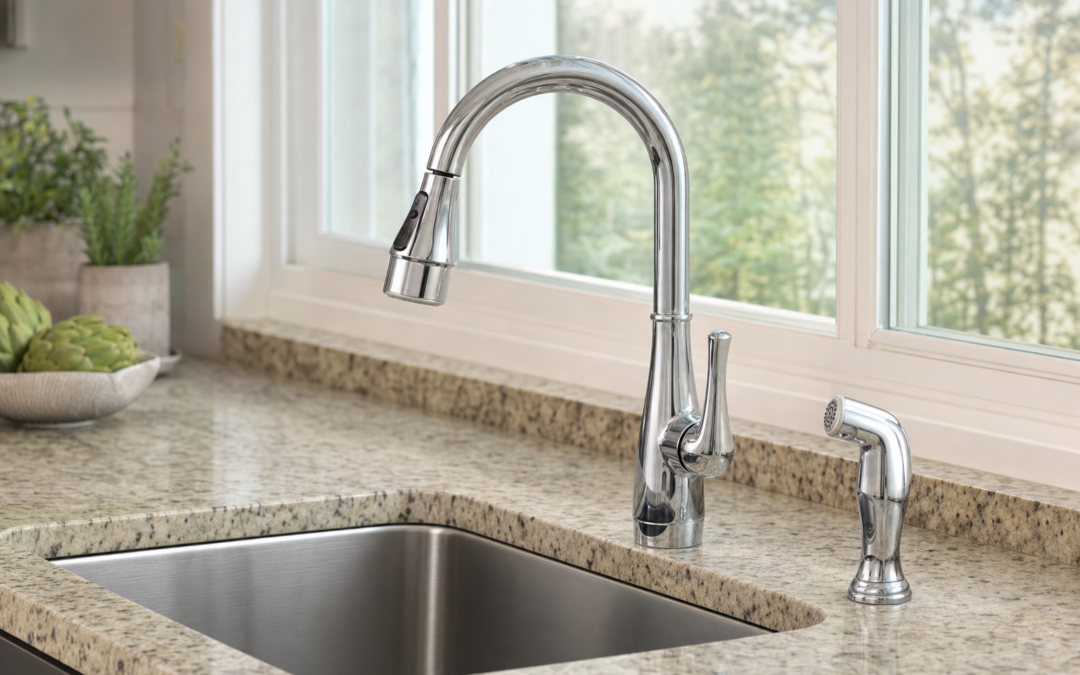
Delta Windemere Chrome Kitchen Faucet with Side Sprayer — A chrome kitchen faucet with a dedicated side sprayer is a practical choice when your sink already has the extra hole and you want traditional controls. Confirm hole spacing and deck compatibility, then route the sprayer hose so it cannot kink against the sink bowl or garbage disposal.
Finishes: Spot-Resist, Chrome, and Real-World Wipe-Downs
Polished chrome and bright stainless show fingerprints and hard-water spots quickly. Spot-resist and similar coatings hide smudges better between cleanings. They are not self-cleaning—minerals still appear—but they look neater on a busy sink deck. Matte black hides some fingerprints yet can show light mineral haze. Choose based on your water and how often you wipe the faucet when you wipe the counters.
Match finish to nearby appliances only if that matters to you. A coherent kitchen helps resale, but durability and cleaning habits matter more day to day. Avoid abrasive cleaners on specialty coatings; mild soap and a soft cloth preserve finish warranties.

Moen Adler Spot Resist Stainless One-Handle High Arc Pulldown Kitchen — A spot-resist stainless pull-down with a high-arc spout suits one-hole sinks and homeowners who want spray built into the head. Check docking strength, spray modes, and whether a deck plate is included if you need to cover unused holes.
DIY Install Outline That Avoids the Classic Leak
Shut off hot and cold stops, open the faucet to relieve pressure, and place a towel-lined bucket under the supply lines. Photograph the hookups. Disconnect supplies, loosen mounting nuts—often with a basin wrench—and lift out the old faucet. Clean the deck thoroughly; old putty and mineral rings prevent a flat seal.
Dry-fit the gasket or deck plate. Feed lines and the pull-down hose carefully. Align the faucet while someone snugs the mount from below. Do not crush plastic shanks. Attach supplies, set the pull-down weight so the hose travels freely without hitting the P-trap, then restore water slowly. Dry every joint with a paper towel and recheck after ten minutes and again after the first evening of dishes.
Flush the aerator after the first day; installation debris loves to lodge there. Cycle spray modes. If the head droops, move the weight in small increments until docking feels secure.
Spec Sheet Details Worth Reading
Prefer metal bodies and replaceable cartridges over mystery plastics at wear points. Lifetime limited warranties are common—read exclusions for abusive cleaners or unusual water conditions. WaterSense labeling indicates efficient flow, typically around 1.5–1.8 gpm for kitchen models. Extremely low flow frustrates pot filling; extremely high flow wastes water without improving cleaning much.
Spray mode variety is nice, but two strong patterns beat five weak ones. Magnetic docking and sturdy hoses matter more than novelty buttons. If anyone in the home needs easier controls, consider ADA-friendly handle designs and lever force.
Mistakes That Cause Callbacks
Ignoring hole layout leaves open holes or forces awkward plates. Skipping manufacturer sealing instructions voids finishes or invites seepage. Misplacing the pull-down weight causes droop or cabinet collisions. Overtightening supplies cracks ferrules. Forgetting to flush aerators mimics “low pressure” after a brand-new install.
Another quiet mistake: leaving a rotten shutoff valve untouched. If the stop is crusted and barely turns, replace it while the faucet is out—or hire that part—so you are not stuck unable to shut water during a future repair.
Seasonal Maintenance Habits That Protect Your Work
Plumbing upgrades fail early when mineral scale, vibration, and ignored drips pile up. Once a quarter, spend fifteen minutes with a flashlight under sinks and behind toilets. Look for mineral crust at supply nuts, damp cabinet corners, and hairline weeping at trap joints. Catching a slow drip early protects particle-board cabinets that swell and grow mildew.
Hard water accelerates aerator clogging and spotty finishes. If flow weakens, unscrew aerators and shower-head screens and soak them in vinegar. Avoid harsh powders on specialty finishes. Kitchen faucets especially appreciate a quick aerator check after any plumbing work on the street or water heater. Label shutoff valves so anyone in the home can stop water during a burst line or running fixture.
Keep a small kit nearby: adjustable wrench, basin wrench, towel stack, plumber’s tape, spare supply washers, and a bucket. The kit turns a panic leak into a controlled repair. Photograph model numbers of faucets, disposals, and valves when you install them—future parts shopping becomes easier.
Safety, Codes, and Know-Your-Limits
Shut off water and, for powered devices, shut off electricity at the breaker before you work. Test that outlets or disposals are truly dead. Wear eye protection when cutting or springing drain snakes—debris and splashback are real. Gloves help with sharp under-sink edges and dirty traps.
Local codes may require permits or licensed work for new water heater circuits, relocated drains, or rough-in changes. Like-for-like fixture swaps are often DIY-friendly; changing drain locations or adding circuits usually is not. When a shutoff valve crumbles in your hand, stop and call a plumber before you flood a cabinet.
Never mix chemical drain openers with mechanical snaking in a way that sprays caustic water. If you already poured chemicals, flush thoroughly and consider professional help rather than risking burns.
Buying Checklist
- Count holes and measure spacing and deck thickness
- Choose pull-down vs side sprayer for your cooking style
- Pick a finish you will maintain
- Confirm deck plate, soap dispenser, and filtration hole needs
- Inspect shutoff valves and supply line condition
- Budget for a basin wrench and towels—not optional tools
FAQ: Kitchen Faucets
Can I put a pull-down on a three-hole sink?
Often yes, with a deck plate that covers unused holes. Confirm the plate ships with the faucet or is sold as a match.
Are spot-resist finishes worth it?
Yes if you dislike constant polishing. You will still wipe occasionally, especially with hard water.
How long should a faucet last?
Many last a decade or longer with decent water quality. Cartridges and spray heads are the usual wear items.
Do I need a plumber?
Like-for-like swaps with working shutoffs are common DIY projects. Corroded valves, cracked sinks, or custom stone work are good reasons to hire help.
Next Steps
Measure twice, choose a workflow-first design, and install carefully so the only water in the cabinet is inside the pipes. Compare the faucet options above, then explore more guidance in our Plumbing hub. The best kitchen faucet disappears into your routine—smooth handle, strong spray, dry cabinet floor.
If you are renovating counters soon, coordinate hole locations with the fabricator. If you are only replacing the faucet, take five minutes to empty the cabinet and improve access; future you will thank present you when a supply line needs a quick swap before Thanksgiving dinner.
Keep receipts and warranty cards with your home binder. Finish warranties sometimes require proof of purchase and approved cleaners. A little documentation beats arguing with a mineral-stained finish two years later.
Finally, teach everyone in the home where the under-sink shutoffs are. A faucet emergency is rare, but knowing how to stop water is part of owning the upgrade—not an extra chore.
Practical Notes for Best Kitchen Faucets for Homeowners (2026 Guide)
Keep receipts, warranty info, and a phone photo of model numbers in a home maintenance album. When a fixture fails two years later, identity beats guesswork. Schedule a seasonal reminder to recheck supply nuts, aerators, and shutoff valve movement so stuck valves do not become flood events.
If you share the home with guests or renters, label shutoffs clearly and leave a one-page tip sheet inside the vanity: what not to flush, how to stop water, where the breaker is for a disposal. Clear instructions prevent panicked calls and destructive DIY.
Choose quality consumables—fresh plumber’s tape, good supply washers, and correct-sized flappers—over mystery bins of mixed parts. Compatibility mistakes cost more time than the dollar you save on the wrong seal.
Practical Notes for Best Kitchen Faucets for Homeowners (2026 Guide)
Keep receipts, warranty info, and a phone photo of model numbers in a home maintenance album. When a fixture fails two years later, identity beats guesswork. Schedule a seasonal reminder to recheck supply nuts, aerators, and shutoff valve movement so stuck valves do not become flood events.
If you share the home with guests or renters, label shutoffs clearly and leave a one-page tip sheet inside the vanity: what not to flush, how to stop water, where the breaker is for a disposal. Clear instructions prevent panicked calls and destructive DIY.
Choose quality consumables—fresh plumber’s tape, good supply washers, and correct-sized flappers—over mystery bins of mixed parts. Compatibility mistakes cost more time than the dollar you save on the wrong seal.
Practical Notes for Best Kitchen Faucets for Homeowners (2026 Guide)
Keep receipts, warranty info, and a phone photo of model numbers in a home maintenance album. When a fixture fails two years later, identity beats guesswork. Schedule a seasonal reminder to recheck supply nuts, aerators, and shutoff valve movement so stuck valves do not become flood events.
If you share the home with guests or renters, label shutoffs clearly and leave a one-page tip sheet inside the vanity: what not to flush, how to stop water, where the breaker is for a disposal. Clear instructions prevent panicked calls and destructive DIY.
Choose quality consumables—fresh plumber’s tape, good supply washers, and correct-sized flappers—over mystery bins of mixed parts. Compatibility mistakes cost more time than the dollar you save on the wrong seal.
Practical Notes for Best Kitchen Faucets for Homeowners (2026 Guide)
Keep receipts, warranty info, and a phone photo of model numbers in a home maintenance album. When a fixture fails two years later, identity beats guesswork. Schedule a seasonal reminder to recheck supply nuts, aerators, and shutoff valve movement so stuck valves do not become flood events.
If you share the home with guests or renters, label shutoffs clearly and leave a one-page tip sheet inside the vanity: what not to flush, how to stop water, where the breaker is for a disposal. Clear instructions prevent panicked calls and destructive DIY.
Choose quality consumables—fresh plumber’s tape, good supply washers, and correct-sized flappers—over mystery bins of mixed parts. Compatibility mistakes cost more time than the dollar you save on the wrong seal.
Practical Notes for Best Kitchen Faucets for Homeowners (2026 Guide)
Keep receipts, warranty info, and a phone photo of model numbers in a home maintenance album. When a fixture fails two years later, identity beats guesswork. Schedule a seasonal reminder to recheck supply nuts, aerators, and shutoff valve movement so stuck valves do not become flood events.
If you share the home with guests or renters, label shutoffs clearly and leave a one-page tip sheet inside the vanity: what not to flush, how to stop water, where the breaker is for a disposal. Clear instructions prevent panicked calls and destructive DIY.
Choose quality consumables—fresh plumber’s tape, good supply washers, and correct-sized flappers—over mystery bins of mixed parts. Compatibility mistakes cost more time than the dollar you save on the wrong seal.
Practical Notes for Best Kitchen Faucets for Homeowners (2026 Guide)
Keep receipts, warranty info, and a phone photo of model numbers in a home maintenance album. When a fixture fails two years later, identity beats guesswork. Schedule a seasonal reminder to recheck supply nuts, aerators, and shutoff valve movement so stuck valves do not become flood events.
If you share the home with guests or renters, label shutoffs clearly and leave a one-page tip sheet inside the vanity: what not to flush, how to stop water, where the breaker is for a disposal. Clear instructions prevent panicked calls and destructive DIY.
Choose quality consumables—fresh plumber’s tape, good supply washers, and correct-sized flappers—over mystery bins of mixed parts. Compatibility mistakes cost more time than the dollar you save on the wrong seal.
Practical Notes for Best Kitchen Faucets for Homeowners (2026 Guide)
Keep receipts, warranty info, and a phone photo of model numbers in a home maintenance album. When a fixture fails two years later, identity beats guesswork. Schedule a seasonal reminder to recheck supply nuts, aerators, and shutoff valve movement so stuck valves do not become flood events.
If you share the home with guests or renters, label shutoffs clearly and leave a one-page tip sheet inside the vanity: what not to flush, how to stop water, where the breaker is for a disposal. Clear instructions prevent panicked calls and destructive DIY.
Choose quality consumables—fresh plumber’s tape, good supply washers, and correct-sized flappers—over mystery bins of mixed parts. Compatibility mistakes cost more time than the dollar you save on the wrong seal.