
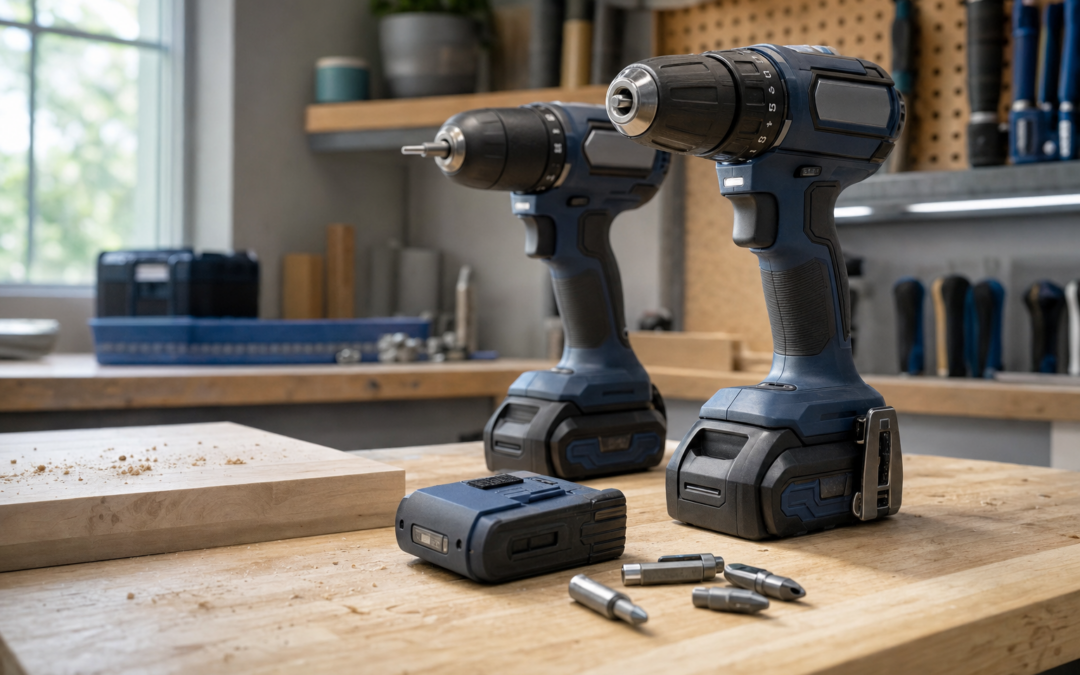
A cordless drill is the first power tool most homeowners actually use weekly. Shelves, curtain rods, furniture assembly, drywall anchors, and fence boards all start with a chuck that can spin a bit and drive a screw without dragging an extension cord across the kitchen. This 2026 guide focuses on homeowner cordless drills—not framing guns for remodelers—so you can choose voltage, clutch, kit contents, and platform without overbuying.
If you are mapping a broader shop, start at our Power Tools hub. Below we stay on drill/drivers: 12V vs 18V/20V, kit vs bare tool, clutch control, and when an impact driver is the better next purchase.
What a Homeowner Drill Actually Needs to Do
Most suburban projects live in a narrow band of torque and speed. You need enough power to drill into studs, soft masonry with the right bit, and hardwood shelves. You need enough control to stop a screw before it sinks and cracks a cabinet door. You do not need a 1,200 in-lb framing monster for hanging a towel bar.
Translate that into buying criteria:
- Chuck size: 1/2-inch chucks handle most homeowner bits; 3/8-inch can still work for light kits
- Clutch ring: numbered settings that slip before you cam out a screw head
- Two-speed gearbox: low for driving, high for drilling
- Battery platform: one ecosystem you will keep buying into
- Weight: something you can hold overhead for a few minutes without shaking
If a listing brags only about peak torque and ignores clutch feel, treat that as a contractor pitch. Homeowners win on control and kit completeness as often as on raw numbers.
12V vs 18V/20V: Honest Tradeoffs
Marketing voltage names differ by brand—DEWALT’s 20V MAX and Milwaukee’s M18 both sit in the same “full-size cordless” class for home use. 12V (and similar compact lines) are lighter and usually cheaper, but they run out of patience on big holes, long screws, and dense hardwoods.
Choose 12V when
- Most work is indoors, light fastening, and furniture
- You value small size for cabinet interiors and overhead work
- You will not soon buy a circular saw or impact on the same batteries
Choose 18V/20V when
- You expect deck screws, lag shields, or thicker lumber
- You want one battery platform for saws, sanders, and lights later
- You prefer longer runtime between swaps on a busy Saturday
Many households land on an 18V/20V compact drill rather than the absolute lightest 12V tool—because the platform unlocks future tools. That is often smarter than buying a tiny drill now and a second chemistry later.
Kit vs Bare Tool
Kits cost more up front and save money if you do not already own the battery and charger. Bare tools are bargains only when the platform is already on your shelf. Count what is in the box: batteries (one or two), charger type, bag or case, and bit sets. A kit that includes a useful bit assortment can replace a separate Amazon cart of random hex bits.
Two batteries matter more than most people admit. One charging while one works keeps projects flowing. If the kit includes only one pack, budget a second battery before a fancy specialty tool.
Clutch, Chuck, and Bit Habits That Prevent Damage
The clutch is why a drill/driver is safer than an impact for finish work. Set a low number for soft woods and hardware that seats easily; raise it for denser materials. When the clutch chatters, stop—do not lean harder until the screw head is ruined.
Tighten the chuck firmly after inserting bits. A loose bit walks, scores the work, and ruins holes. Keep a short set of quality bits: #2 Phillips, square, Torx for modern deck screws, and a small drill index for pilot holes. Pilot holes in hardwood and near board ends prevent splits better than any torque number on the box.
When You Should Prefer an Impact Driver Instead
Impacts excel at long fasteners and repetitive driving. If your Saturday is three hundred deck screws, an impact with the right bits will be faster and less wrist-intensive. Drills still win at drilling holes with round-shank bits and at delicate assembly where clutch slip protects hardware.
Many homeowners eventually own both on the same battery platform. Buy the drill first if you do not already have one; add the impact when screw volume climbs. Our impact-vs-drill guide covers that decision in depth once your first drill is chosen.
Product Callouts: Cordless Drills We Review
These four options span kit convenience, compact pro platforms, light 12V duty, and bare-tool ecosystem plays. Open each review for model notes and current configuration details.

DEWALT 20V MAX* Cordless Drill/Driver Kit with Screwdriver/Drill Bit Set — A complete 20V kit with battery, charger, and a generous bit set—ideal when you want one purchase that hangs shelves, assembles furniture, and covers weekend fixes without hunting accessories separately.

Milwaukee M18 18V Lithium-Ion 1/2 Inch Cordless Drill Driver Compact Kit 2606 — Compact M18 power in a kit form that suits homeowners already eyeing Milwaukee’s platform. Strong mid-weight pick when you want more torque than a 12V toy without a giant contractor drill.
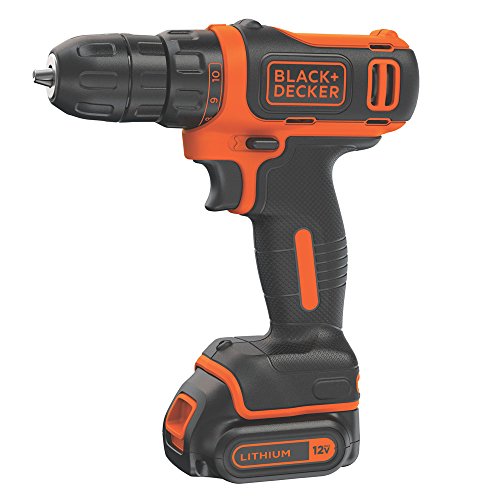
BLACK+DECKER 12V MAX Cordless Drill/Driver — Lightweight 12V MAX option for light fastening and small holes. Best when most jobs are picture hangers, flat-pack furniture, and occasional pilot holes—not framing or thick masonry.

RYOBI ONE+ 18V Cordless 1/2in Drill/Driver PCL206B (Tool Only) — Tool-only ONE+ drill for shoppers already on Ryobi batteries (or planning to be). Sensible bare-tool entry when the platform price and Home Depot ecosystem matter more than a premium kit.
Matching Drill Choice to Common Home Projects
Shelves, mirrors, and wall anchors
You need accurate hole placement, a level, and a clutch that does not overdrive drywall anchors. A compact 12V or a light 18V/20V both work. Spend money on a good stud finder and quality anchors before upgrading the drill.
Furniture and flat-pack assembly
Clutch control is everything. Soft particleboard cams out easily. Use low clutch settings and the bits that match the hardware—often hex or Phillips. Magnetic bit holders reduce dropped screws inside cabinets.
Deck boards and outdoor fasteners
Step up to 18V/20V, sharp bits, and often an impact for driving. Predrill near ends. Exterior screws demand torque and runtime that strain tiny packs.
Occasional masonry
A hammer drill or rotary hammer is better for real concrete. Many homeowner drills can poke a few holes in soft brick with masonry bits, but do not expect contractor masonry performance from a compact drill/driver.
Battery Platform Strategy for 2026
Pick a brand ecosystem you can buy locally and online without drama. DEWALT 20V MAX, Milwaukee M18, Ryobi ONE+, and similar lines all support homeowner shops if you stay consistent. Mixing platforms means duplicate chargers and orphan batteries.
Brushless motors generally run cooler and longer for the same battery size, but a brushed kit that includes two batteries can still be the better first purchase if the price gap is large and your duty cycle is light. Upgrade tools later; do not stall the first project waiting for a perfect brushless flagship.
Safety and Care Basics
- Wear eye protection when drilling overhead or into brittle materials
- Secure small workpieces—do not hold with one hand and drill with the other on risky cuts
- Remove the battery before changing bits if you are distracted or working with kids nearby
- Store batteries away from extreme heat and metal shavings that can bridge contacts
- Retire damaged cords on chargers; cracked packs belong at proper recycling, not in a junk drawer
Keep the chuck jaws clean. Packed dust makes bits slip and scores shanks. A quick brush after dusty drywall sessions extends tool life more than any spray-on “treatment.”
Budget Tiers Without the Hype
Entry: a complete 12V or value 18V kit that includes charger and at least one battery. Goal: stop borrowing the neighbor’s drill.
Homeowner sweet spot: an 18V/20V compact kit with two batteries and a useful bit set. Goal: cover 90% of indoor and light outdoor fastening.
Platform builder: bare tool plus extra batteries only if you already own the charger, or a kit from the brand you will expand into saws and lights. Goal: one chemistry across the shop.
False economy is buying the cheapest no-name drill with an orphan battery you cannot replace in two years. Stick to platforms with ongoing pack availability.
Common Buying Mistakes
- Choosing max torque alone and ignoring weight and clutch
- Buying bare tools with no batteries “to save money”
- Skipping pilot bits and then blaming the drill for split trim
- Using worn Phillips bits that cam out and ruin screw heads
- Assuming every 20V-class tool is the same size—hold compact vs high-torque models if you can
- Waiting for an impact when you still cannot drill a clean hole for anchors
A Practical Weekend Test Drive (Without Wasting Money)
After you buy, run a short skills loop before the “big” project: drill pilot holes in scrap, drive and back out screws at several clutch settings, and try your most common wall anchor. Learn where the clutch chatters and how the two-speed switch feels with gloves on. Ten minutes of scrap practice prevents the first visible mistake on a guest-facing wall.
Label chargers and spare packs. Households with teens or guests borrow tools; clear labels reduce the odds that a pack walks to a friend’s car and never returns. Hang the drill on a hook or park it on a charging shelf so the next job starts with a green battery, not a scavenger hunt.
Drill Accessories Worth Buying Early
- A small indexed drill bit set in fractional sizes you actually use
- Driver bit packs in Phillips, square, and Torx with quality tips
- A magnetic bit holder and a few short stubs for tight cabinets
- Painter’s tape for marking depths and protecting finished surfaces
- A cheap stud finder and a reliable torpedo level
These cost less than a second tool and multiply what your drill can do cleanly. Fancy right-angle adapters can wait until you have a real recurring need inside deep cabinets.
How to Read Spec Sheets Without Getting Played
Torque numbers are measured in different ways across brands, and peak torque is not the same as usable control in a cabinet hinge. Translate marketing into questions: Does the tool have a real clutch with enough steps for soft materials? Is the chuck metal and does it run true? How much does the kit weigh with the battery you will actually buy? Is the battery pack available as a standalone spare two years from now?
Runtime claims assume light loads. Drilling repeated large holes in hardwood empties packs faster than hanging three pictures. If a kit includes only a small amp-hour pack, treat the second battery as part of the true purchase price. Chargers that take forever also matter—USB-C PD fantasies are less relevant than a charger that returns you to work during lunch.
Brushless vs brushed is real, but not magical. Brushless often means better efficiency and longevity under load. Brushed still hangs shelves. If the brushed kit includes two batteries and a bit set while the brushless bare tool includes nothing, the brushed kit can be the smarter week-one buy—with a planned brushless upgrade later on the same platform.
Ergonomics: Balance, Grip, and Overhead Work
A drill that looks compact on a white background can still be nose-heavy with a large battery. If possible, hold the tool with the pack attached. Check that your finger reaches the trigger without contorting, and that the forward/reverse switch is reversible for left-handed use if that matters in your household.
Overhead work into ceiling boxes or high shelves punishes weight quickly. Compact mid-torque drills often beat high-torque clubs for homeowner comfort. Belt hooks and LED worklights are small features that reduce dropped tools and misaligned holes in dark garages. Rubber overmolds help in cold shops; smooth plastic bricks feel worse after twenty minutes.
Bits, Anchors, and the Invisible Half of Drilling
The drill is only half the system. Dull bits burn wood and wander off layout lines. Cheap anchors spin in drywall and teach you to hate the tool. Build a small consumables kit beside the drill: quality twist bits, a masonry bit or two for occasional brick, plastic and expanding anchors rated for your loads, and a stubby bit set for inside cabinets.
For metal, use appropriate speeds and cutting fluid on thicker stock—do not expect a homeowner drill to replace a drill press for precision fabrication. For tile, use spear-point or specialty bits and painter’s tape to reduce skate; better yet, hire out fragile backsplash drilling if you only do it once.
Household Rules That Keep Tools Alive
Create a simple rule: tools return to the charge shelf with bits removed and chuck tightened empty. Loose bits in a tote migrate into laundry and lawn. Teach teens the clutch exists—full-trigger driving into soft pine is how furniture gets cratered. If multiple adults share the garage, a shared shopping list for spare packs prevents surprise dead batteries on Saturday morning.
When a pack swells, cracks, or gets soaking wet, retire it through proper recycling channels. Do not toss lithium packs in household trash. Keep metal filings away from bare battery terminals in a junk drawer—that drawer is how shorts happen.
FAQ: Homeowner Cordless Drills
Is 12V enough for a house?
Yes for light indoor work and furniture. If you expect decks, thick lumber, or a multi-tool battery platform, start in the 18V/20V class instead.
Do I need a hammer drill?
Only if you regularly drill masonry. Occasional soft-brick holes can use masonry bits in a standard drill; serious concrete wants a purpose-built hammer or rotary tool.
Kit or tool-only?
Buy a kit unless you already own compatible batteries and a charger. Tool-only looks cheaper until you add packs.
When should I add an impact driver?
When you drive lots of long screws. Keep the drill for holes and delicate work; let the impact handle repetitive fastening.
Which brand is “best”?
The best brand is the one whose batteries you will keep buying and can find locally. Compare the reviewed kits above for homeowner-fit notes rather than chasing forum loyalty wars.
Next Steps
Decide voltage class from your real project list, then choose kit vs bare based on batteries you already own. Compare the reviewed drills above, open the full notes for each, and keep the purchase inside one battery ecosystem.
Browse more tools in our Power Tools hub, and treat the drill as the foundation of a small kit—not the entire shop. A controlled clutch and two charged batteries beat a heavier “pro” tool you avoid lifting.